

| SEO title | SDA Housing for Families: A 2026 Guide | Nexus Care |
| Meta description | A family-focused 2026 guide to choosing Specialist Disability Accommodation, covering SDA design categories, what to look for and how Nexus Care designs for independence. |
| Primary keyword | Specialist Disability Accommodation Melbourne |
Choosing a home for a family member with disability is one of the most important decisions a family can make — and it deserves more than a compliance checklist.
For families supporting a person with significant disability, Specialist Disability Accommodation can be life-changing. It is purpose-built housing funded under the National Disability Insurance Scheme for participants whose needs cannot be met by ordinary housing. But not all SDA is the same. This guide is written for families — not investors — and explains what SDA is, the design categories that matter, the difference between housing that is merely compliant and housing built for dignity, and how Nexus Care approaches the task.
WHAT THIS GUIDE COVERS
01. What Specialist Disability Accommodation actually is
02. Who is eligible for SDA
03. Understanding the SDA design categories
04. Compliance-built versus dignity-built SDA
05. What families should look for in an SDA home
06. How Nexus Care designs for independence
07. The Nexus Care SDA pipeline across Melbourne
08. Starting the conversation
09. Frequently asked questions
What Specialist Disability Accommodation actually is
Specialist Disability Accommodation, almost always shortened to SDA, is purpose-built housing for people with extreme functional impairment or very high support needs. It is funded through the National Disability Insurance Scheme. Importantly, SDA funding pays for the dwelling — the bricks, the accessible design, the assistive features — and is separate from the funding that pays for the support workers and services a person receives. The two work together but are budgeted differently.
SDA is not a large part of the NDIS by number — only a minority of participants are eligible — but for those who are, it can be the difference between living in an institutional or unsuitable setting and living in a genuine home. For families, understanding what SDA is and is not is the first step. It is housing, designed to a defined standard, that a person can live in for the long term. Nexus Care is the Nexus Developments vertical dedicated to delivering it, and Specialist Disability Accommodation is one of the seven sectors in which Nexus Developments operates.
It also helps to separate SDA from a related term families often hear: Supported Independent Living. SDA is the physical home. Supported Independent Living describes the assistance a person receives with daily tasks, often within that home. A person may have both in their plan, and the two are designed to work together — but they are funded and chosen separately. When a family is choosing an SDA dwelling, they are choosing the building and its design, while the support arrangements are a distinct decision made with the participant’s support team.
Who is eligible for SDA
SDA is not available to every NDIS participant. Eligibility is assessed by the NDIS and is generally reserved for participants with extreme functional impairment or very high support needs, where SDA is shown to be the most appropriate way to meet those needs. A participant’s eligibility, and the design category they are funded for, will appear in their NDIS plan.
Because eligibility is individually assessed, families should not assume a particular outcome. The right starting point is a conversation with the participant’s NDIS planner or support coordinator, who can explain whether SDA is being considered and what design category applies. This guide does not assess eligibility — it explains what to look for once a family knows SDA is on the table.
For families at the start of this process, it helps to know that the journey from an SDA conversation to moving into a home takes time. There are assessments, plan reviews and, often, a wait for a suitable dwelling to be available in the right location. This is precisely why a developer’s forward pipeline matters to families. A developer actively building new SDA homes is expanding the pool of genuine choices, rather than leaving families to compete for a small and ageing stock. Nexus Developments approaches its SDA pipeline with that responsibility in mind.
SDA is more than accessible housing. It is the foundation that makes independent living realistic for the person who lives there.
Understanding the SDA design categories
SDA is delivered against defined design categories, each intended for a different level of need. A family choosing an SDA home should know which category their family member is funded for, because it determines what the dwelling must provide.
The four SDA design categories
- Improved Liveability provides housing with a better level of physical access and good support for people with sensory, intellectual or cognitive impairment.
- Fully Accessible provides housing with a high level of physical access for people with significant physical impairment.
- Robust provides housing that is resilient and reduces the risk to the resident and the community, designed for people who may require a very structured environment.
- High Physical Support provides housing with a very high level of physical access for people who need significant support, including features that support assistive technology and complex care.
The category is not a label to skim past. It defines doorway widths, bathroom design, structural reinforcement, ceiling provisions for hoists, and many other features. A Nexus Care home is designed and built by Nexus Developments to the relevant SDA design standard so that the dwelling genuinely matches the funded category — not a category close to it.
Concept graphic illustrating SDA design and compliance — every Nexus Care dwelling is built to the relevant SDA design standard.
Compliance-built versus dignity-built SDA
This is the most important distinction in the entire guide. Two SDA dwellings can both satisfy the design standard and still be very different places to live. Compliance-built SDA does the minimum the rules require. The doorways are wide enough, the bathroom is accessible, the certification is in order — and the home still feels like a clinical facility. Dignity-built SDA treats the standard as a floor, not a ceiling, and designs a home a person would actually choose to live in.
The difference shows in details that no checklist captures: natural light, the quality of finishes, whether the kitchen is usable rather than merely present, whether a resident has genuine privacy, whether the building feels like a home or a ward. For a family, this distinction is everything. A person may live in an SDA home for decades. It should feel like theirs.
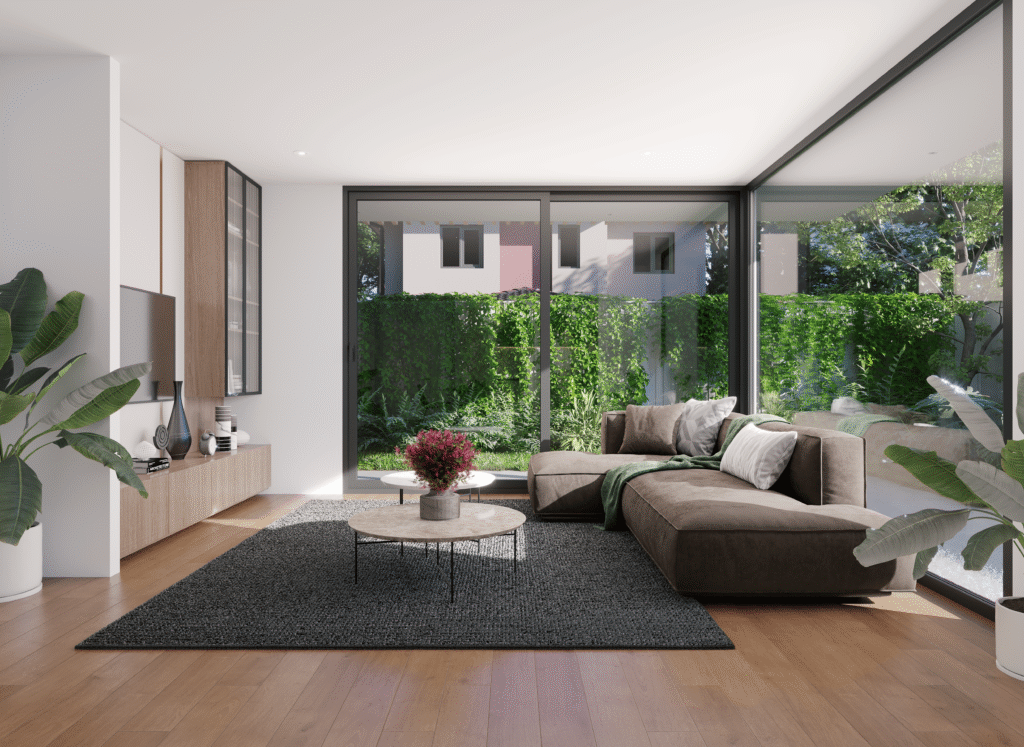
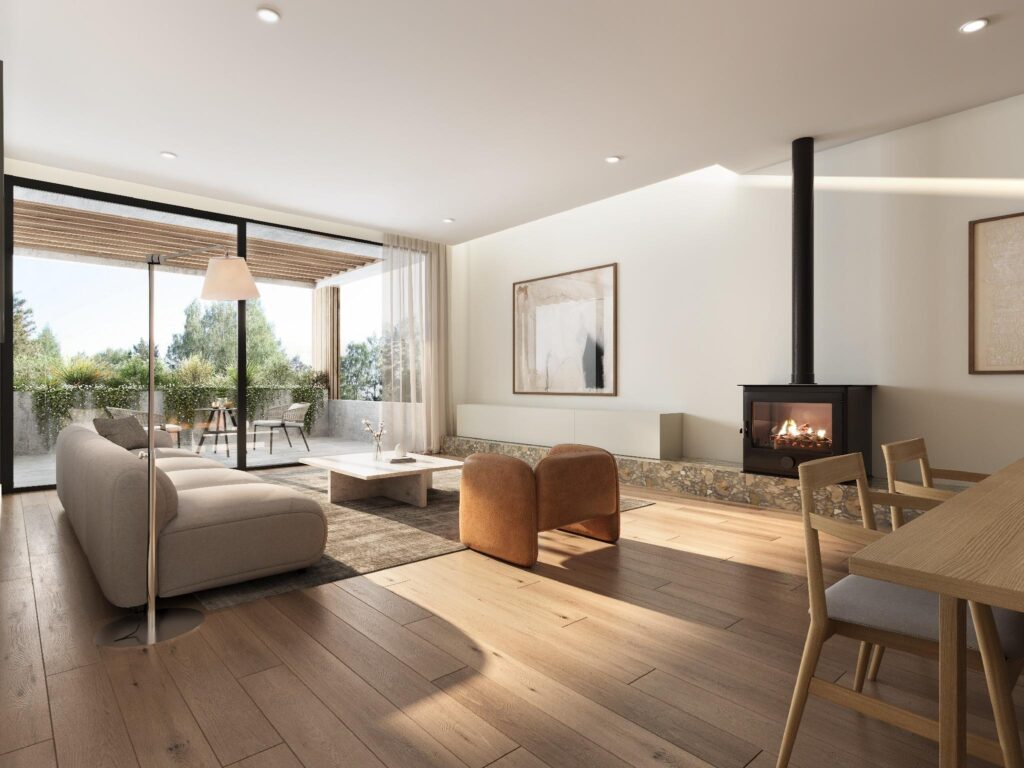
Interior of an accessible apartment at the Ashburton SDA development — Nexus Care designs SDA homes to feel like homes, not facilities.
Nexus Developments built Nexus Care on the dignity-built principle. The company’s view is that meeting the SDA standard is the starting point of good SDA, not the finish line.
There is a practical reason this matters beyond the emotional one. A home that genuinely supports a resident — that is well lit, well laid out and comfortable — tends to support better daily outcomes. A resident who can move confidently through their own kitchen, who has private outdoor space, and who lives somewhere that does not feel clinical is a resident with more agency over their own day. Dignity-built design is not a luxury layered on top of SDA. It is part of how the housing does its job.
What families should look for in an SDA home
When a family visits or reviews an SDA option, it helps to look beyond the certification and assess the home as a place to live. The following questions are a practical guide.
- Does the home match the funded design category exactly, with documented compliance?
- Is the location genuinely connected — close to transport, services, health care and the support networks the resident relies on?
- Is there natural light, private outdoor space and a sense of being a home rather than a facility?
- Does the layout support the resident’s independence, allowing them to do as much as possible for themselves?
- If on-site overnight support is needed, is there appropriate provision for it without compromising the resident’s privacy?
- Is the developer experienced in SDA specifically, with a track record of delivering completed accessible housing?
A family that works through these questions is far better equipped to compare options. Location is often underrated: an SDA home that is technically perfect but isolated from transport and services can undermine the very independence it was meant to enable. The Nexus Care pipeline is deliberately positioned in established Melbourne suburbs for this reason.
How Nexus Care designs for independence
Independence is the design brief at Nexus Care, the SDA vertical of Nexus Developments. Every decision — the height of a benchtop, the swing of a door, the placement of controls, the line of sight from a bedroom — is assessed against a single question: does this help the resident do more for themselves? Accessible design done well is invisible. It removes barriers without announcing that it has done so, and it is a standard Nexus Developments holds itself to on every SDA home.
Concept graphic representing independent living — the design objective behind every Nexus Care SDA home.
Nexus Care also designs SDA within a broader Nexus Developments commitment to quality. New dwellings across the company are built to a 7-8 star NatHERS energy rating, which means an SDA home is not only accessible but comfortable and economical to run — a real benefit for residents who may spend a large part of their time at home. The same institutional governance that supports the wider pipeline, including partnerships with Colliers and Maddocks, applies to Nexus Care projects.
Interior of an accessible apartment at the Ashburton SDA development — designed by Nexus Care to support resident independence.
Designing for independence also means designing for the people who support a resident. Where a participant requires overnight on-site support, a well-designed SDA home provides for that support discreetly, with appropriate space that does not intrude on the resident’s own living areas or sense of privacy. Nexus Care treats the resident’s home as the resident’s home first. Support is accommodated within it thoughtfully, rather than the home being arranged around the support. That ordering of priorities is a quiet but important part of dignity-built design.
The Nexus Care SDA pipeline across Melbourne
Families assessing a developer should ask what that developer has actually committed to building. Nexus Care holds a substantial SDA pipeline across Melbourne, totalling 32 SDA apartments with $52M of combined Care gross realisable value. The pipeline is concentrated in established, well-serviced suburbs rather than fringe locations.
- The Ashburton SDA in Ashburton comprises 10 NDIS units and is currently under construction.
- Mentone Mews on Balcombe Road in Mentone comprises 13 apartments in total — 12 NDIS apartments plus 1 Care apartment across 3 levels — and is under construction.
- Mentone Heights, also in Mentone, combines 5 townhouses with 9 NDIS units and is under planning.
- The Campbellfield Superclinic, with 8 consulting suites, complements the Care portfolio by bringing medical services into the network.
This breadth matters to families because it reflects a developer that is committed to SDA as a discipline rather than as a one-off project. The Nexus Developments SDA pipeline is also supported by the same institutional governance, partnerships and quality standards that apply across the company’s $400M+ pipeline. You can review the Nexus Care vertical and the full project list to see how the Nexus Developments pipeline is progressing.
Starting the conversation
Choosing an SDA home is not a decision to rush. Families are encouraged to involve the participant’s support coordinator, to visit homes where possible, and to ask the questions set out in this guide. The most important voice in the process is the future resident’s own: wherever possible, the person who will live in the home should be central to the choice. Nexus Care welcomes conversations with families and support coordinators about its current and upcoming SDA homes.
Nexus Developments is based at 314/101 Overton Road, Williams Landing VIC 3027, and can be reached on +61 3 9460 1865 or at info@nexusdevelopments.com.au. Families can also contact Nexus Developments directly to discuss how Nexus Care designs Specialist Disability Accommodation for independence and dignity, or read further insights from the Nexus team on accessible housing and the NDIS.
Frequently asked questions
What is Specialist Disability Accommodation?
Specialist Disability Accommodation, or SDA, is purpose-built housing for NDIS participants with extreme functional impairment or very high support needs. SDA funding covers the dwelling itself and is separate from the funding for support services. Nexus Care is the Nexus Developments vertical dedicated to designing and delivering SDA across Melbourne.
How do I know which SDA design category my family member needs?
The SDA design category — Improved Liveability, Fully Accessible, Robust or High Physical Support — is determined through the NDIS planning process and will appear in the participant’s plan. Families should confirm the funded category with their NDIS planner or support coordinator, and Nexus Care designs each home to match the relevant SDA design standard exactly.
What is the difference between compliance-built and dignity-built SDA?
Compliance-built SDA meets the minimum design standard and can still feel clinical. Dignity-built SDA treats the standard as a floor and designs a home a person would genuinely choose to live in, with attention to light, finishes, privacy and independence. Nexus Care builds to the dignity-built principle, treating compliance as the starting point rather than the goal.
Where are Nexus Care SDA homes located?
Nexus Care holds a pipeline of 32 SDA apartments across established Melbourne suburbs, including the Ashburton SDA in Ashburton, Mentone Mews and Mentone Heights in Mentone. These homes are positioned in well-serviced locations close to transport and services to support resident independence.
How can a family learn more about Nexus Care SDA homes?
Families and support coordinators can contact Nexus Developments on +61 3 9460 1865 or at info@nexusdevelopments.com.au, or visit the Nexus Care page. The team can explain the current SDA pipeline and how each home is designed to match a funded design category while supporting independence and dignity.
About Nexus Developments
Nexus Developments is a leading multi-sector property development company based in Melbourne, Australia, with a project pipeline of over $400 million across residential, NDIS Specialist Disability Accommodation, Montessori-philosophy childcare, education and commercial real estate. Founded by Bhupendra (Ben) Sethia — a 25-year industry leader and Founder Chairman of JITO Australia — and Vish Singh, Nexus Developments operates with institutional-grade governance, partnerships with Colliers and Maddocks, a 7-8 star NatHERS energy standard on every new dwelling, and a commitment to contribute more than 600 dwellings to the National Housing Accord.
Across Nexus Communities, Nexus Care, Nexus Learning, Nexus Commercial and the Nexus Wealth Fund, Nexus Developments delivers projects designed to compound long-term value for investors and communities alike. Whether you are an investor seeking exposure to Melbourne property development, a first-home buyer looking at Melbourne growth corridors, a family considering NDIS-accredited Specialist Disability Accommodation, or a landowner looking for a delivery partner, Nexus Developments has a pathway for you.
Take the next step with Nexus Developments
- Explore current Nexus Developments projects across Melbourne and regional Victoria →
- Register your interest in a Nexus Developments residential community →
- Speak to our investor relations team about the Nexus Wealth Fund →
- Learn how Nexus Care designs SDA housing built for independence →
- Read more insights and market intelligence from the Nexus team →
- Contact Nexus Developments →
Building Sustainable Communities · Distributing Wealth
Nexus Developments APAC · nexusdevelopments.com.au · info@nexusdevelopments.com.au
Disclaimer: This article is general information only and does not constitute financial, investment, legal or tax advice. Investments in Nexus Wealth Fund products are available to wholesale and sophisticated investors as defined under the Corporations Act 2001 (Cth). Past performance is not a reliable indicator of future performance. Renders are artist impressions and indicative only.