
Australia has a housing supply problem that has been decades in the making, and the national housing accord is the federal response designed to confront it. Signed between the Commonwealth, states and territories, local government, investors and the construction industry, the accord set an aspirational target of building well over one million new homes across the country, with an extended ambition reaching far higher. Behind those headline numbers sits a harder question: who actually builds the homes, on what land, and to what standard?
That is where the response of individual developers matters. Targets written into an intergovernmental agreement do not pour a single slab of concrete. The dwellings only appear when developers acquire sites, secure planning approvals, arrange finance and complete construction. At Nexus Developments, a Melbourne-based multi-sector property developer with a pipeline of more than $400M across 16 projects in seven sectors, the accord is not an abstract policy document. It is a framework that the company has chosen to engage with directly through a formal commitment of 600+ dwellings.
This article looks at what the national housing accord actually asks of the industry, why supply has been so difficult to lift, and how a diversified developer like Nexus Developments contributes across residential estates, retirement living, disability accommodation, childcare and mixed-use precincts. The aim is to move past the slogans and show what responding to the accord looks like in practice.
What the National Housing Accord Actually Is
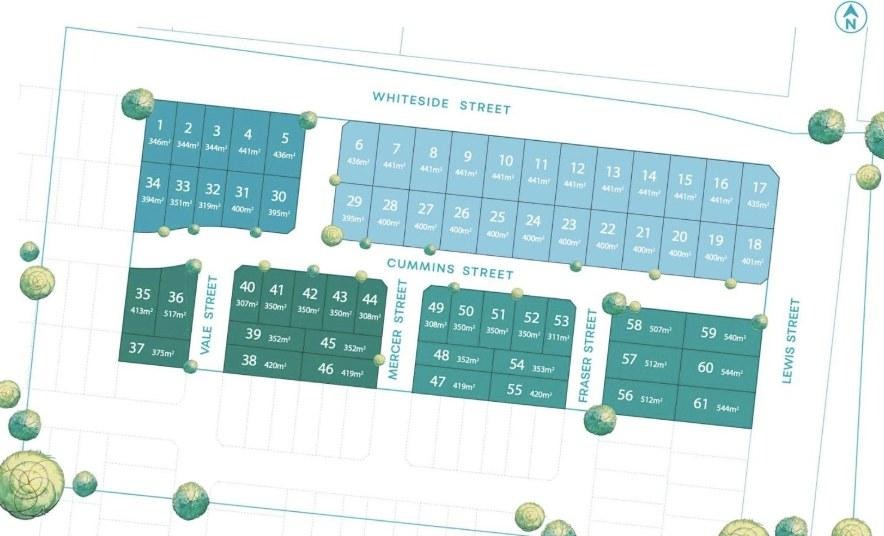
*The Clan Estate in Beveridge, a completed 61-lot residential community contributing to Melbourne’s housing supply.*
The national housing accord is a cooperative agreement that brings together every level of government alongside institutional investors and the building industry. Its purpose is to coordinate the effort required to deliver a large volume of new homes over a defined period, rather than leaving supply to drift with the property cycle. The accord pairs construction targets with funding mechanisms, planning reform commitments and incentives intended to draw private capital into housing that the market has historically under-supplied.
What makes the accord different from earlier housing statements is its explicit acknowledgement that the public sector cannot solve the problem alone. The volume of homes required is far beyond what government construction budgets could ever fund directly. Instead, the accord is built on the assumption that private developers, superannuation funds and other institutional investors will carry most of the delivery, with government smoothing the path through planning, land release and targeted subsidy.
For a developer, the practical takeaway is that the accord rewards organisations able to move quickly across multiple housing types. A company that only builds one product in one location is exposed to the planning and market conditions of that single niche. A diversified developer such as Nexus Developments can direct capital and capacity toward whichever sector is moving, which is precisely the flexibility the accord needs from industry.
Why Housing Supply Has Been So Hard to Lift
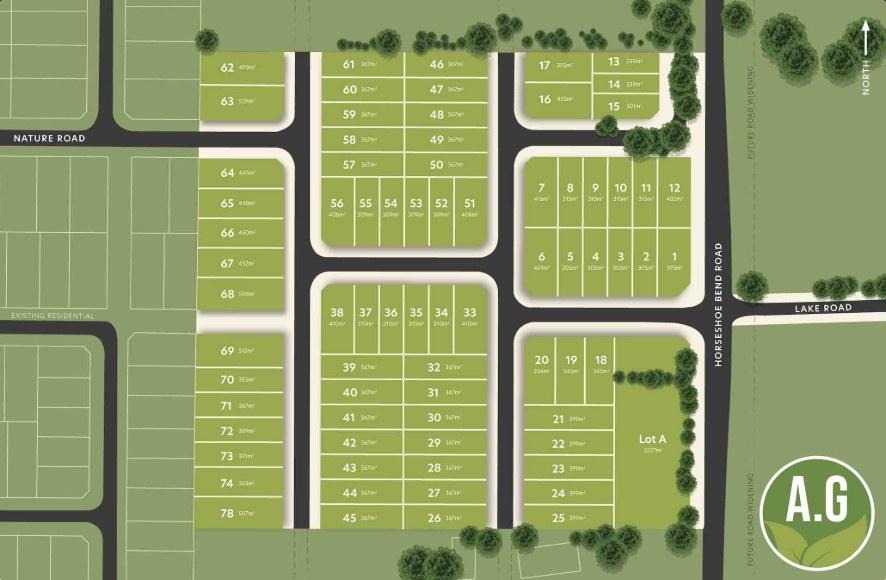
*Armstrong Grove in Armstrong Creek, a 75-lot residential subdivision under construction.*
Understanding the accord requires understanding why supply lagged in the first place. Housing delivery in Australia is constrained at several points at once. Land suitable for development must be zoned, serviced with water, power, drainage and roads, and approved through planning systems that can take years to navigate. Each of those steps adds time and cost before a single home is sold.
Construction itself has faced sustained pressure from material costs, labour shortages and the financial fragility of builders operating on thin margins. When input costs rise faster than sale prices, marginal projects stall, and the pipeline of future homes thins out even as demand keeps climbing. The result is the structural shortfall the national housing accord was created to address.
Nexus Developments approaches these constraints by working across the full lifecycle of delivery and by pairing with experienced governance partners. The company engages Colliers for advisory and market intelligence and Maddocks for legal, planning and compliance, which helps de-risk the approval and feasibility stages where many projects falter. That structure is part of how a developer keeps a pipeline moving when conditions are difficult.
The 600+ Dwelling Commitment
The most concrete element of the Nexus Developments response to the accord is a commitment of 600+ dwellings to the national housing accord. This is not a marketing figure attached to a single estate. It reflects homes delivered across a range of projects and housing types, which is consistent with the accord’s intent to lift supply broadly rather than in one segment.
A commitment of this scale is meaningful precisely because it is anchored to an existing pipeline. Nexus Developments already carries more than $400M of work across 16 projects, so the dwelling commitment draws on real sites with real approvals at various stages rather than speculative future acquisitions. That distinction matters when assessing whether an accord pledge is credible.
The commitment also sits alongside the company’s environmental standards. New dwellings are built to a 7 to 8 star NatHERS energy rating, which means the homes contributing to the accord are not only adding to supply but doing so at a level of energy performance above the minimum. Responding to the housing shortage and improving the quality of the housing stock are treated as the same task rather than competing ones.
Why a Number Beats a Slogan
Stating 600+ dwellings rather than a vague promise of support gives partners, councils and government a figure they can hold the company to. Nexus Developments has chosen to make its accord contribution measurable, which is the only way an industry-wide target can be tracked at all.
How a Multi-Sector Pipeline Contributes

*Nexus Life Shepparton, an 81-home resort-style retirement village planned for the Goulburn Valley.*
The phrase housing supply can sound narrow, as if it refers only to detached homes on greenfield lots. In reality the national housing accord depends on many housing types being delivered at once. This is where the breadth of the Nexus Developments pipeline becomes directly relevant to the policy objective.
Through Nexus Communities, the company delivers masterplanned residential estates, luxury townhouses and resort-style living for the over-55 market. The Armstrong Creek corridor alone, combining Armstrong Grove and Allemore Charlemont, accounts for 150 lots plus one super lot with a combined gross realisable value of $62M. Each of those lots becomes a home, which is the most direct contribution a developer can make to the accord.
Retirement and land-lease living adds another layer. Nexus Life Shepparton is planned as an 81-home resort-style retirement village on the Goulburn Valley Highway, a $42M project. Homes for older Australians free up larger family dwellings elsewhere in the market, so this kind of supply eases pressure well beyond its own footprint.
Specialist Housing as Part of the Answer
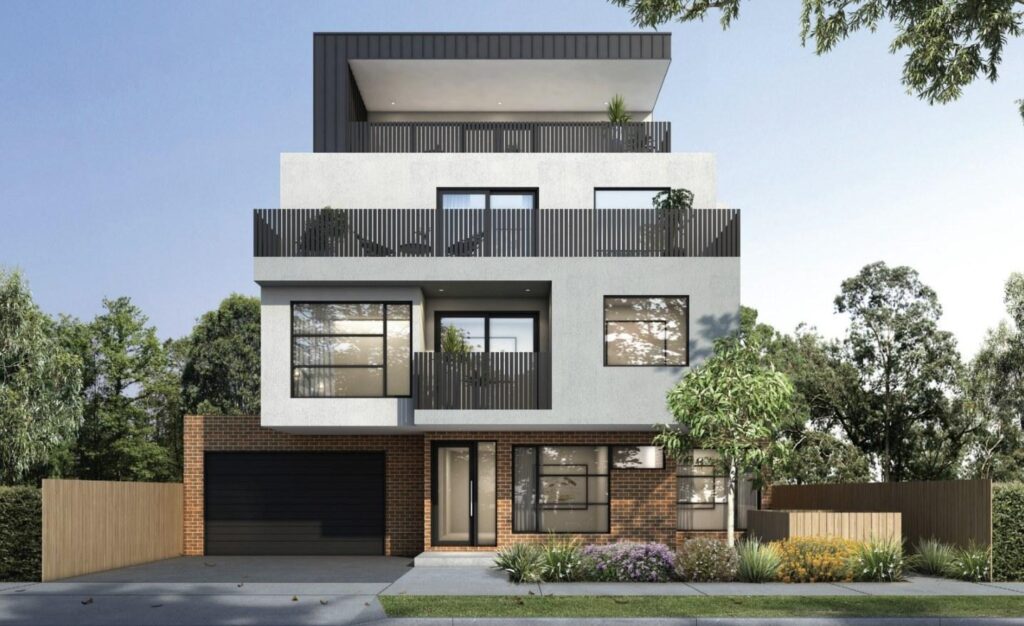
*Mentone Mews, a 13-apartment development including 12 NDIS and 1 Care apartment.*
A common blind spot in housing debates is the assumption that all the new homes required are for the general market. The national housing accord, however, is concerned with housing for everyone, including Australians who need specialist accommodation. This is where the care side of the Nexus Developments business contributes supply that the open market rarely delivers.
Through Nexus Care, the company is building NDIS Specialist Disability Accommodation alongside medical centres. Its total SDA pipeline across Ashburton, Mentone Heights and Mentone Mews comes to 32 SDA apartments with a combined Care gross realisable value of $52M. These are homes built for people with significant disability, a cohort whose housing need is acute and chronically underserved.
Counting specialist accommodation as part of the accord response reflects a more honest reading of what housing supply means. A dwelling that lets a person with disability live with dignity is as much a contribution to the nation’s housing stock as a townhouse in a growth corridor. Nexus Developments treats both as core to its commitment.
Mixed-Use Precincts and the Activity-Centre Model

*The Sunshine Precinct, a mixed-use accommodation, retail and entrepreneurship hub.*
The accord is increasingly tied to the idea that new homes should be built where infrastructure already exists, particularly around established activity centres and transport. Sprawl on the urban fringe is expensive to service, so policymakers favour density that uses existing roads, rail and amenities. Mixed-use development is central to that vision.
Nexus Developments addresses this through Nexus Commercial and projects such as the Sunshine Precinct, a $48M mixed-use accommodation, retail and entrepreneurship hub. Precincts of this kind add homes while also adding the shops, services and workspaces that make a neighbourhood function, which is exactly the integrated supply the national housing accord encourages.
Building near established centres also tends to draw less community resistance than greenfield expansion, because the surrounding infrastructure is already in place. For a developer, that can translate into smoother approvals, and smoother approvals are one of the few levers that genuinely accelerate the rate at which accord-aligned homes reach the market.
Finance, Risk and Keeping a Pipeline Moving
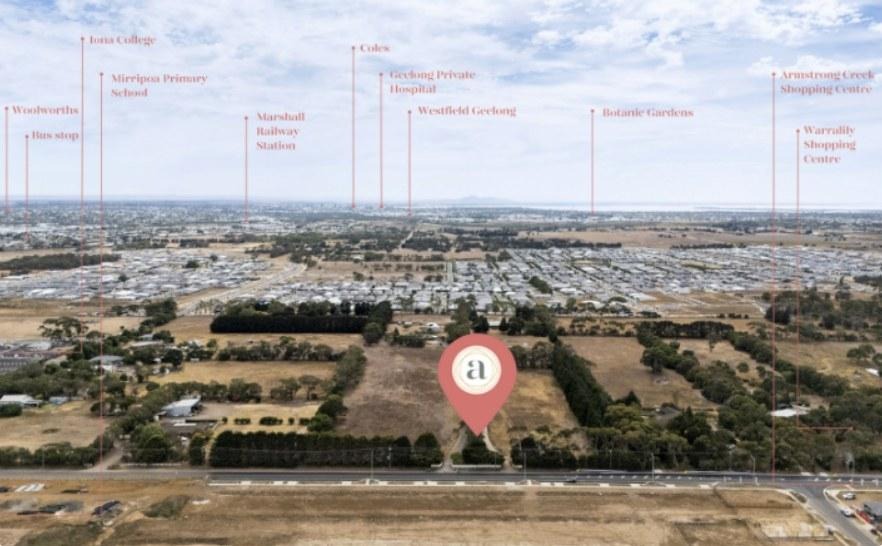
*Allemore Charlemont, a completed development of 75 lots plus one super lot.*
A housing target is only as real as the finance behind it. One reason supply stalls is that traditional construction funding can be expensive, slow and tightly rationed, especially when builders are under stress. Developers responding seriously to the national housing accord have to think about how their projects are capitalised, not only how they are designed.
Nexus Developments runs several mechanisms here. Its Nexus Wealth Fund operates three funds, an Equity Fund, an Income Stream and Capital Growth Fund, and an Absolute Return Fund, which are available to wholesale and sophisticated investors only. Channelling private capital into delivery is precisely the institutional-investment role the accord envisaged for the funds sector.
The company also runs EquiHomes, an equity-based home building model that removes the need for traditional finance, and Nexus Project Management for full-lifecycle delivery on behalf of external clients. Together these reduce the financial choke points that so often slow housing delivery, which is a quieter but essential part of any developer’s response to the accord.
What Responsible Supply Looks Like
Meeting a housing target quickly is not the same as meeting it well. The national housing accord will be judged not only on how many homes are built but on whether those homes are durable, efficient and located in genuinely liveable communities. A developer that hits its number with poor-quality stock has not really succeeded.
This is why the Nexus Developments tagline, Building Sustainable Communities, Distributing Wealth, is more than branding in the accord context. The 7 to 8 star NatHERS standard on new dwellings, the partnership with the JGI Group on the mission of 100% literacy in disadvantaged communities, and the long-horizon vision for Ahimsa City all point to a definition of supply that includes quality and community, not just volume.
For readers weighing how seriously a developer takes the accord, the test is whether the supply commitment is matched by standards. You can review the full set of projects on the All Projects page and judge for yourself whether the 600+ dwelling commitment is backed by real work. Nexus Developments has structured its pipeline so that the answer is visible rather than asserted.
Frequently Asked Questions
What is the national housing accord?
The national housing accord is a cooperative agreement between the Commonwealth, states and territories, local government, investors and the construction industry to lift the supply of new homes across Australia over a defined period. It pairs construction targets with planning reform and funding mechanisms, on the basis that private developers and institutional investors will deliver most of the homes while government smooths the path.
How many dwellings has Nexus Developments committed to the accord?
Nexus Developments has committed 600+ dwellings to the national housing accord. The commitment is anchored to the company’s existing pipeline of more than $400M across 16 projects, so it draws on real sites at various stages of approval and construction rather than speculative future acquisitions.
Why does a multi-sector pipeline help with housing supply?
Because the accord depends on many housing types being delivered at once, a diversified developer can direct capacity toward whichever sector is moving. Nexus Developments contributes residential lots, retirement homes, specialist disability accommodation and mixed-use precincts, which broadens supply rather than concentrating it in a single niche that may stall under local conditions.
Does specialist disability accommodation count toward housing supply?
Yes. The national housing accord is concerned with housing for everyone, including Australians who need specialist accommodation. The Nexus Developments SDA pipeline across Ashburton, Mentone Heights and Mentone Mews totals 32 SDA apartments with a combined Care gross realisable value of $52M, all of which add to the nation’s housing stock.
How do new Nexus Developments homes perform on energy efficiency?
New dwellings are built to a 7 to 8 star NatHERS energy rating, which is above the minimum standard. This means the homes contributing to the accord add to supply while also improving the energy performance of the housing stock, treating volume and quality as the same task rather than competing ones.
About Nexus Developments
Nexus Developments is a leading multi-sector property development company based in Melbourne, Australia, with a project pipeline of over $400 million across residential, NDIS Specialist Disability Accommodation, Montessori childcare, education and commercial real estate. Founded by Bhupendra (Ben) Sethia — a 25-year industry leader and Founder Chairman of JITO Australia — Nexus Developments operates with institutional-grade governance, partnerships with Colliers and Maddocks, a 7-8 star NatHERS energy standard on every new dwelling, and a commitment to contribute more than 600 dwellings to the National Housing Accord.
Across Nexus Communities, Nexus Care, Nexus Learning, Nexus Commercial and the Nexus Wealth Fund, Nexus Developments delivers projects designed to compound long-term value for investors and communities alike. Whether you are an investor seeking exposure to Melbourne property development, a first-home buyer looking at Melbourne growth corridors, a family considering NDIS-accredited Specialist Disability Accommodation, or a landowner looking for a delivery partner, Nexus Developments has a pathway for you.
Take the next step with Nexus Developments
→ Explore current Nexus Developments projects across Melbourne and regional Victoria
→ Register your interest in a Nexus Developments residential community
→ Speak to our investor relations team about the Nexus Wealth Fund
→ Learn how Nexus Care designs SDA housing built for independence
→ Read more insights and market intelligence from the Nexus team
Building Sustainable Communities · Distributing Wealth
Nexus Developments APAC · nexusdevelopments.com.au · info@nexusdevelopments.com.au
Disclaimer: This article is general information only and does not constitute financial, investment, legal or tax advice. Investments in Nexus Wealth Fund products are available to wholesale and sophisticated investors as defined under the Corporations Act 2001 (Cth). Past performance is not a reliable indicator of future performance. Renders are artist impressions and indicative only.