

Is upgrading your home in Australia the right move for your household right now, and if so, how do you manage the transition without unnecessary financial risk?
Upgrading a home in Australia is one of the most financially significant decisions a household makes after initial home ownership. Done well, it captures equity built in the first property, improves family liveability as households grow, and positions buyers in locations with superior long-term capital growth. Done poorly, the costs of selling, buying, and bridging can erode the equity advantage and leave upgraders worse off than if they had stayed or waited.
According to the Real Estate Institute of Australia (REIA) upgraders represent a significant and consistent segment of the residential property market, with household growth, changing lifestyle needs, and equity accumulation the primary motivations for trading up.
At Nexus Developments our Armstrong Creek estates attract a significant proportion of upgrader buyers, drawn by the combination of generous lot sizes, architectural quality, and superior capital growth credentials that the Armstrong Creek infrastructure pipeline supports.
This blog provides a practical guide to upgrading your home in Australia, covering timing, financial strategy, location selection, and how to manage the transition effectively.
When Is the Right Time to Upgrade Your Home?

There is no universal answer to when to upgrade, but a structured framework helps households assess whether the time is right for their specific circumstances rather than relying on market sentiment alone.
Signals that suggest upgrading may be well-timed:
- Household growth: A growing family that has outgrown the current home’s bedroom count, outdoor space, or storage capacity faces a liveability constraint that compounds over time. Addressing it sooner rather than later reduces the cumulative cost of inadequate space.
- Equity accumulation: Significant equity growth in the current property, through both capital appreciation and mortgage reduction, provides the financial foundation for upgrading without excessive leverage in the next purchase.
- Income stability improvement: Increased household income that comfortably supports higher mortgage repayments makes upgrading feasible where it was previously constrained.
- Infrastructure delivery in target location: When a growth corridor you have been watching moves from planning to active infrastructure delivery, the window for upgrading into it at pre-infrastructure pricing begins to close.
- Life stage alignment: Children approaching school age, hybrid work arrangements creating demand for home office space, or proximity to ageing parents are life stage factors that independently justify upgrading decisions.
The Financial Mechanics of Upgrading: What Buyers Need to Manage
The financial complexity of upgrading, specifically the simultaneous management of a property sale and a new purchase, is the most common source of stress and error in the upgrading process.
Key financial mechanics to manage when upgrading:
- Bridging finance: If you purchase before your existing property sells, bridging finance covers the gap between settlement of the new purchase and receipt of sale proceeds. Bridging finance is more expensive than standard mortgages and should be used for the shortest possible period.
- Sell first or buy first: Selling first gives certainty on available equity but may require temporary accommodation between settlement dates. Buying first carries the risk of needing to sell quickly at a suboptimal price. Most upgraders benefit from selling first in a balanced market.
- Deposit timing: Contracts often require a deposit within 24 to 48 hours of acceptance. Confirm how you will fund the deposit on the new purchase before making offers, particularly if equity is tied up in an unsold property.
- Stamp duty on the new purchase: Upgraders do not qualify for first home buyer stamp duty concessions. The full stamp duty cost on the new purchase is a significant transaction cost that should be factored into equity calculations.
- Agent and legal costs on the sale: Agent commissions, marketing costs, and conveyancing fees on the sale of the existing property reduce the net proceeds available for the upgrade. Model these costs explicitly in your financial planning.
Note: Specific financial strategies for upgrading depend on individual circumstances including equity position, income, credit profile, and local market conditions. Independent financial and mortgage advice is strongly recommended before committing to an upgrade transaction.
How to Choose the Right Location When Upgrading

The location decision in an upgrade is more consequential than in an initial purchase, because upgraders are typically moving into higher price points where the absolute cost of a poor location decision is larger.
Location assessment framework for upgraders:
- Infrastructure investment horizon: Upgrading into a location that is approaching the delivery phase of a major infrastructure commitment captures appreciation on confirmed value uplift rather than speculative future potential.
- School catchment quality: For families with school-aged or approaching school-aged children, school catchment quality is a primary location driver with direct implications for both liveability and resale demand.
- Lot and home size relative to household needs: Upgrading into a home with genuinely more space than the current dwelling, in terms of both indoor living and outdoor area, delivers the liveability improvement that justifies the transaction costs.
- Community character alignment: Households upgrading for lifestyle reasons should assess whether the community character of the target location aligns with their household values and social preferences, not just its price and size metrics.
- Long-term neighbourhood trajectory: Assess the development pipeline, infrastructure investment, and demographic profile of the target location to understand whether it is improving, stable, or declining as a neighbourhood proposition.
Armstrong Grove and Allemore at Armstrong Creek attract upgraders because they deliver the generous lot sizes, architectural quality, park frontages, and infrastructure-backed community trajectory that households moving up from their first home are actively seeking.
New Build vs. Established Home: Which Is Better for Upgraders?
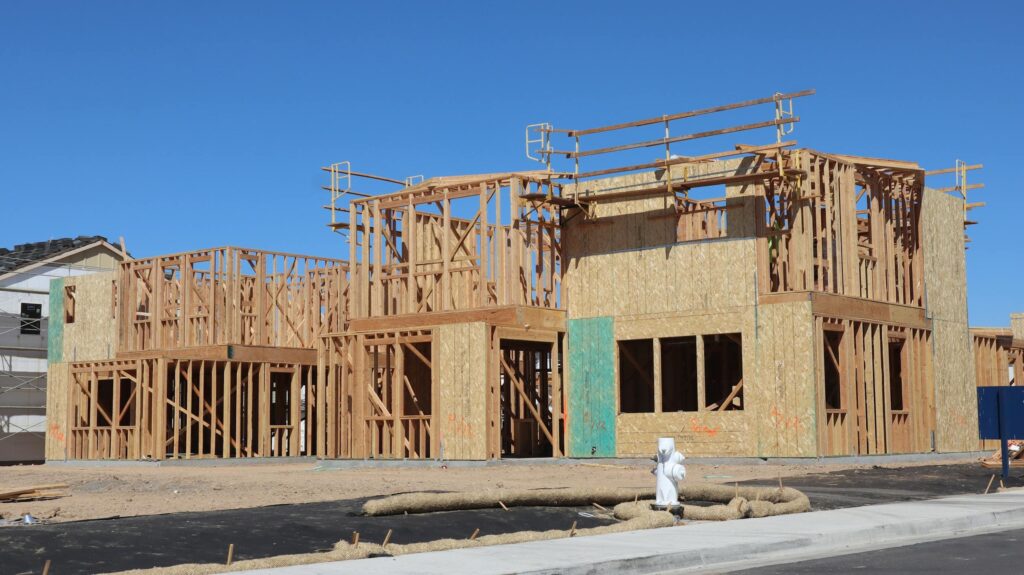
Upgraders face a choice that first home buyers typically do not: whether to purchase a new build or an established home in their target location. Each option has distinct advantages and trade-offs.
New build advantages for upgraders:
- Modern design and layout: New builds reflect current design thinking around open-plan living, indoor-outdoor connection, and home office integration that many established homes lack.
- Energy efficiency: New builds to 7-8 star ratings deliver lower ongoing energy costs, smaller carbon footprints, and greater thermal comfort than the majority of established housing stock.
- Warranty protection: Domestic building warranties provide meaningful coverage on structural defects in new builds, reducing maintenance uncertainty in the early years of ownership.
- Inclusions customisation: Purchasing a new build off-plan allows upgraders to specify finishes, fixtures, and layouts within the builder’s range, tailoring the home to household preferences.
Established home advantages for upgraders:
- Immediate occupancy: An established home can be occupied immediately after settlement, eliminating the need for bridging accommodation during a construction period.
- Established gardens and landscaping: Mature landscaping in established homes can take years to replicate in a new build, an important consideration for households with strong outdoor living priorities.
- Known neighbourhood character: The community around an established home is visible and assessable at the time of purchase, whereas a new estate’s community character is still forming.
Managing the Emotional Complexity of Upgrading
Upgrading a home involves not just financial and logistical complexity but genuine emotional complexity. Sellers are often emotionally attached to their current home, and buyers can be intimidated by the scale of the new purchase.
Practical approaches to managing the emotional dimension:
- Separate sentiment from strategy: Emotional attachment to the current home can cause sellers to overprice, delay, or add conditions that reduce market appeal. Work with an agent who will provide honest market feedback.
- Define non-negotiables in advance: Before beginning the search, agree with your household on the non-negotiable requirements for the new home, limiting the scope for post-inspection regret or analysis paralysis.
- Use professional advice proactively: Engaging a buyer’s advocate, financial adviser, and conveyancer before the process begins rather than reactively during it reduces decision-making pressure at critical moments.
- Plan for extended timelines: Most upgrading transactions take longer than anticipated. Building buffer time into your financial planning and accommodation arrangements reduces the cost of delays.
Nexus Developments’ sales team has guided hundreds of upgrader buyers through the purchase process at Armstrong Creek. Our approach prioritises informed decision-making over sales pressure, reflecting a development philosophy that values long-term buyer outcomes over short-term transaction volume.
Upgrading into Armstrong Creek: What Buyers Are Choosing and Why
Armstrong Creek has become one of Victoria’s most popular upgrader destinations, combining the new build quality, community design, and infrastructure investment that households moving up from first homes are actively seeking.
Why upgraders are choosing Armstrong Creek:
- Generous lot sizes: Armstrong Creek lots offer 400-600 square metre allotments that deliver the outdoor space families outgrow from smaller inner suburban lots.
- Architectural quality: Design guidelines and builder standards across Armstrong Grove and Allemore estates maintain the streetscape and home quality that upgraders expect at their new price point.
- Park-fronting premium lots: Park frontage lots at Allemore deliver an outlook and direct open space access that many upgrader families specifically seek when leaving denser suburbs.
- Infrastructure trajectory: The active $5 billion infrastructure delivery program across Armstrong Creek is converting the corridor’s potential into delivered amenity in real time, rewarding buyers who moved when infrastructure was still under construction.
- Capital growth alignment: Upgraders who purchased in Armstrong Creek’s early stages have experienced genuine capital growth driven by infrastructure delivery, with further appreciation expected as remaining infrastructure is completed.
Explore upgrader options at Armstrong Grove and Allemore to understand why households across Melbourne and Geelong are choosing Armstrong Creek for their upgrade.
Ready to upgrade your home in Australia into a location with genuine infrastructure, quality design, and long-term growth credentials? Explore Armstrong Grove and Allemore at Armstrong Creek. Nexus also offers Project Management services and Land Lease options for flexible property solutions. Contact info@nexusdevelopments.com.au or call +61 3 9460 1865.
Note: Financial strategies for upgrading depend on individual circumstances. All information is provided for general guidance only. Independent financial, mortgage, and legal advice should be sought before committing to any property upgrade transaction.