
Is a land lease community in Australia the right housing model for your circumstances, or do the differences from standard freehold ownership matter more than the affordability advantage suggests?
Land lease communities in Australia offer a genuinely different path to residential living, particularly for retirees, downsizers, and buyers seeking quality lifestyle accommodation at a lower entry price than traditional freehold ownership. Under a land lease arrangement, you own your home outright but lease the land beneath it from the community operator. This structure reduces the upfront purchase cost substantially, making lifestyle estate living accessible to households who might otherwise be priced out.
According to the Manufactured Home Estates, Caravan Parks, Residential Land Lease Communities framework administered by Consumer Affairs Victoria, residents of residential land lease communities in Victoria have specific legal protections governing site fees, site fee increases, and dispute resolution, providing a regulated framework for this housing model.
At Nexus Developments we offer Land Lease options as part of our flexible property solutions, recognising that different households have different financial structures and lifestyle priorities that are best served by different ownership models. Explore our full range of residential and lifestyle housing options to understand where land lease fits.
This guide explains how land lease communities work in Australia, who they suit, what the financial implications are, and the critical questions to ask before committing.
How Does a Land Lease Community Work?
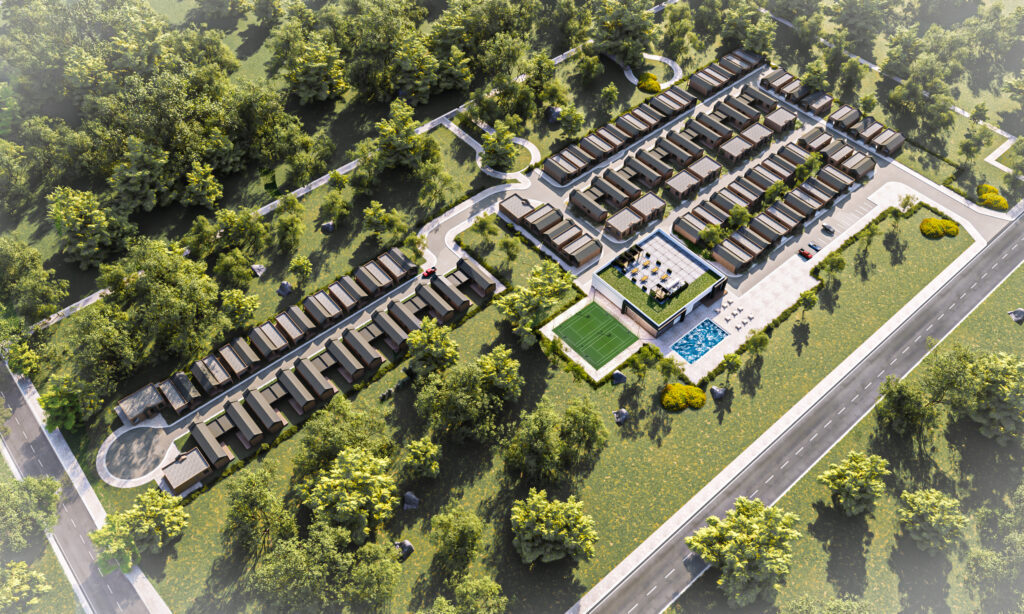
A land lease community, sometimes called a lifestyle estate or manufactured home estate, is a residential community where homeowners purchase their dwelling but lease the land it sits on from the estate operator.
The core mechanics of a land lease community:
- Home ownership: You purchase the home placed on your site. The home is yours outright, and you may be able to sell it, subject to the terms of your site agreement and the operator’s approval process.
- Land lease: You pay a regular site fee to the estate operator for the right to occupy your leased site. Site fees are typically paid fortnightly or monthly and cover access to communal facilities and services within the estate.
- Site agreement: Your rights and obligations as a resident are governed by a site agreement, a legally binding document regulated by state legislation. Understanding this document thoroughly before signing is essential.
- Community facilities: Land lease estates typically include shared facilities such as swimming pools, clubhouses, bowling greens, walking paths, and recreational infrastructure, funded collectively through site fees.
- No stamp duty on the land: Because you are not purchasing the land, stamp duty applies only to the value of the home itself, not the land, which can represent a significant saving relative to freehold property at equivalent locations.
Who Are Land Lease Communities Designed For?
Land lease communities are not universally suitable for all buyers. They are specifically well-suited to certain household profiles and circumstances, and less suited to others.
Households for whom land lease communities are typically well-suited:
- Retirees and downsizers: Older Australians seeking quality lifestyle accommodation with low maintenance, active community environments, and access to recreational facilities at a lower entry price than comparable freehold communities.
- Owner-occupiers seeking lifestyle: Buyers who prioritise daily lifestyle quality, community connection, and recreational amenity over the capital growth potential of freehold ownership.
- Buyers with equity but limited ongoing income: Households with capital from a property sale but modest ongoing income may find that lower site fees, compared to strata levies and council rates on freehold property, improve their cash flow position in retirement.
- Those seeking community living: Residents who value the social environment of an age-similar community, with shared facilities and active lifestyle programming, over the independence and privacy of standard residential living.
Land lease communities are generally less suitable for buyers with strong capital growth objectives, those intending to leave property to an estate, or younger buyers for whom freehold equity building is a priority over current lifestyle quality.
The Financial Differences Between Land Lease and Freehold Ownership
Understanding the financial structure of land lease versus freehold ownership is essential for making an informed comparison. The differences are significant and affect both entry costs and long-term financial outcomes.
Key financial differences:
- Lower entry price: The absence of land purchase substantially reduces the upfront cost of entry into a land lease community relative to equivalent freehold property in a similar location.
- No land capital growth: Because you do not own the land, you do not benefit from land value appreciation, which is typically the primary driver of capital growth in residential property.
- Ongoing site fees: Regular site fee payments are a permanent ongoing cost of land lease living. Understanding the current site fee, the mechanism for increases, and the long-term trajectory of fees is critical before signing.
- Site fee review mechanisms: Victorian legislation governs how and when site fees can be increased. Understanding these mechanisms protects residents from unexpected cost escalation.
- Home resale market: The resale market for homes in land lease communities is typically smaller than the freehold market, which may affect the time it takes to sell and the price achieved relative to an equivalent freehold property.
Note: The financial implications of land lease versus freehold ownership are complex and depend on individual circumstances including age, equity position, income, and estate planning objectives. Independent financial and legal advice is strongly recommended before entering a land lease arrangement.
What Victoria’s Land Lease Legislation Protects
Victoria’s residential land lease community legislation provides specific protections for residents that are important to understand before signing a site agreement.
Key protections under Victorian land lease legislation:
- Site fee increase limitations: The legislation governs the frequency and basis for site fee increases, preventing arbitrary or excessive increases by operators.
- Notice requirements: Operators must provide prescribed notice periods before increasing site fees or making other changes to the terms of occupation.
- Dispute resolution access: Residents have access to Consumer Affairs Victoria and VCAT for dispute resolution if issues with the operator cannot be resolved directly.
- Termination protections: The legislation limits the circumstances under which an operator can terminate a site agreement and requires significant notice and process before any termination can take effect.
- Disclosure requirements: Operators must provide prescribed disclosure documents before a site agreement is signed, giving prospective residents access to information about site fees, community rules, and operator obligations.
Prospective residents should read the Consumer Affairs Victoria guidance on residential land lease communities thoroughly and engage an independent solicitor to review the site agreement before signing.

Questions to Ask Before Signing a Land Lease Site Agreement
A land lease site agreement is a long-term commitment. The questions you ask before signing determine whether you enter the arrangement with clarity and confidence or discover important limitations after the fact.
Critical questions for prospective land lease residents:
- What is the current site fee and what is the review mechanism? Understand the current fee, how often it can be reviewed, and what index or basis determines the increase amount.
- What facilities are included in the site fee and what costs extra? Some communities include all facility access in the site fee. Others charge separately for specific amenities. Clarify the full cost of living in the estate.
- What are the rules regarding home modifications and improvements? Understand what changes you can make to your home and whether operator approval is required, and on what basis it can be refused.
- What happens to your home if the operator sells the estate? Understand how a change of estate ownership affects your site agreement and rights as a resident.
- What is the resale process for your home? Understand whether the operator has rights of first refusal, approval over buyers, or fees payable on the sale of your home.
- What is the financial standing of the estate operator? A financially stable operator is important for long-term community quality. Request information about the operator’s track record and financial position.
Land Lease as Part of a Broader Housing Strategy
For some households, a land lease community is not a permanent housing destination but one component of a broader housing and financial strategy across retirement.
How land lease fits within a broader housing strategy:
- Downsizing capital release: Selling a freehold property and entering a land lease community releases equity that can be invested to provide retirement income, improving long-term financial security.
- Lifestyle optimisation: For households where daily lifestyle quality takes priority over capital accumulation in retirement, land lease communities deliver superior lifestyle per dollar than many freehold alternatives.
- Healthcare proximity planning: Some retirees use land lease entry as an opportunity to relocate to a community near family or healthcare facilities, addressing practical support needs alongside lifestyle priorities.
- Transitional housing: For households uncertain about their long-term location needs, a land lease arrangement with appropriate exit terms can provide quality accommodation without the full capital commitment of freehold purchase.
Nexus Developments offers Land Lease options alongside our freehold house and land packages, retirement living, and specialist accommodation portfolio, allowing households to choose the structure that best aligns with their financial and lifestyle circumstances. Explore our full range of residential housing options including Land Lease to find the right fit.
Want to understand whether a land lease community in Australia is the right option for your household, or explore how it compares to freehold alternatives? Contact Nexus Developments to discuss our flexible housing options including Land Lease, house and land packages, and lifestyle retirement communities. Nexus also offers Project Management services for flexible property solutions. Contact info@nexusdevelopments.com.au or call +61 3 9460 1865.
Note: Land lease arrangements are legally complex and have significant long-term financial and lifestyle implications. All information in this blog is provided for general guidance only. Independent legal and financial advice should be sought before entering any land lease site agreement. Refer to Consumer Affairs Victoria for current legislative information.