
Can real estate investment in Australia genuinely deliver both competitive financial returns and meaningful community benefit, or is that combination always a trade-off?
Impact investing in real estate Australia wide is a growing discipline that challenges the long-held assumption that financial returns and social outcomes are inevitably in tension. A new generation of developers and investors is demonstrating that property development can address genuine community needs, including disability housing, affordable family homes, aged care facilities, and early education infrastructure, whilst delivering investment performance that stands up to comparison with conventional alternatives.
According to the Responsible Investment Association Australasia (RIAA) responsible and impact investment in Australia has grown substantially over recent years, with investors across superannuation, institutional, and retail categories increasingly demanding that capital allocation reflect social and environmental values alongside financial objectives.
At Nexus Developments impact is embedded in how we develop, not appended as a marketing overlay. From NDIS housing that improves lives for participants, to Montessori childcare that advances early education access, to energy-efficient homes that reduce environmental footprint, our development portfolio reflects a genuine conviction that purpose and profit reinforce each other.
This blog examines what impact investing in real estate actually means, how it works in the Australian context, and what it looks like when implemented authentically by a developer with a multi-sector portfolio.
What Is Impact Investing in Real Estate?

Impact investing refers to investment activity that is intentionally designed to generate positive social or environmental outcomes alongside financial returns, with both dimensions measured and reported rather than simply claimed.
In the real estate context, impact investing encompasses:
- Specialist disability accommodation: Purpose-built housing for NDIS participants that addresses a critical national undersupply whilst generating government-backed rental income for investors.
- Affordable housing development: New residential development priced to align with first home buyer scheme thresholds, expanding access to quality home ownership for households otherwise locked out by market pricing.
- Early childhood education facilities: Purpose-built childcare and early learning centres in underserved communities, addressing educational access gaps whilst generating long-term lease income.
- Retirement and aged care communities: Purpose-built retirement living that improves quality of life for older Australians whilst providing long-duration investment income from a structurally growing demand base.
- Energy-efficient residential development: New builds that exceed minimum energy standards, reducing carbon emissions and household energy costs whilst positioning assets favourably in an increasingly sustainability-conscious market.
What distinguishes genuine impact investment from conventional development with a social story is intentionality, measurement, and accountability. Impact investors set specific outcome targets and measure performance against them, not just financial metrics.
Why Impact and Returns Are Not Mutually Exclusive
The assumption that impact investment requires accepting lower returns than conventional alternatives is contradicted by the actual performance characteristics of many impact-oriented real estate sectors in Australia.
Why impact and returns reinforce each other in Australian real estate:
- Government-backed income streams: NDIS housing, affordable housing schemes, and childcare subsidies provide income that is partially or substantially funded by government, reducing the income volatility that characterises market-dependent commercial assets.
- Structural demand drivers: Impact-oriented sectors including disability housing, retirement living, and early education are driven by demographic and policy forces rather than discretionary consumer behaviour, creating more durable demand than cycle-sensitive sectors.
- Long lease terms and tenant stability: Purpose-built facilities attract long-term operators and tenants whose businesses are anchored in the physical asset, reducing turnover risk compared to short-lease commercial or residential tenancies.
- Regulatory tailwinds: Government policy in Australia increasingly supports the supply of social infrastructure including disability housing, affordable homes, and childcare, creating a favourable regulatory environment for impact-oriented development.
- ESG premium in asset markets: Institutional investors and superannuation funds are allocating increasing capital to ESG-aligned assets, creating a buyer market for impact-oriented property that supports valuations and exit liquidity.
The Nexus Developments Approach to Impact Development
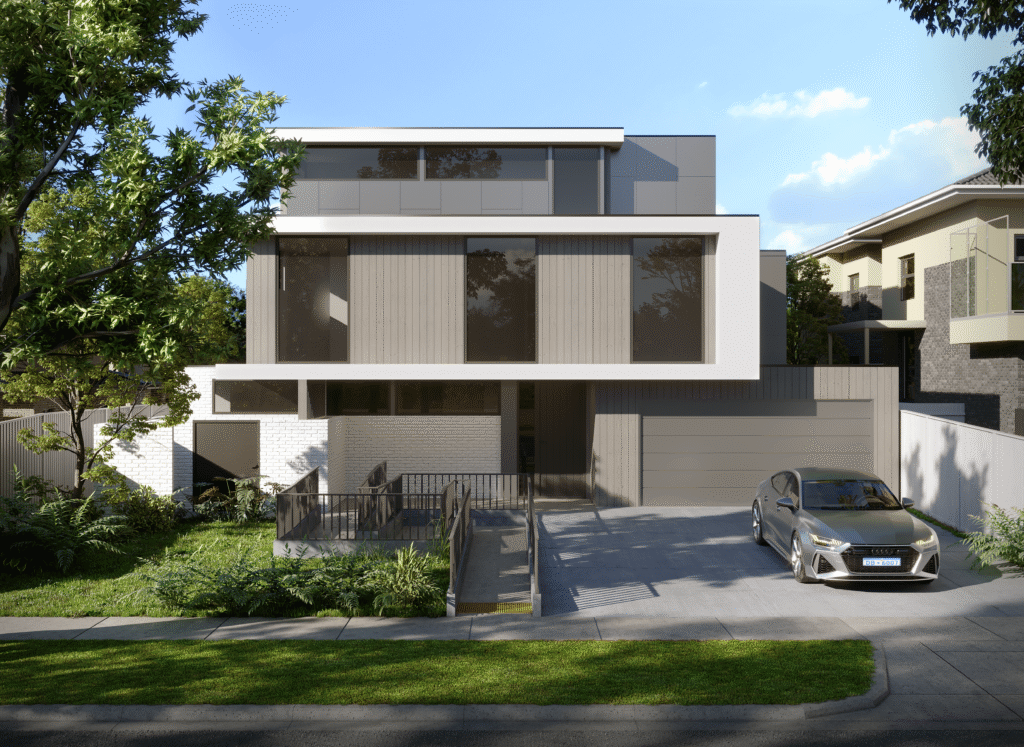
Nexus Developments has operated across multiple property sectors since inception, with a development philosophy that consistently prioritises projects that serve genuine community need alongside investor interests.
How the Nexus impact philosophy manifests across the portfolio:
- NDIS and specialist disability housing: Nexus Care projects in Ashburton and Mentone deliver purpose-built SDA housing that improves independence and dignity for NDIS participants whilst generating government-backed income for investors.
- Montessori early education: Nexus Learning’s Discovery Cove Numurkah and Eaglehawk childcare centres bring quality Montessori early education to regional communities with limited access to premium early learning.
- Resort-style retirement living: Nexus Life Shepparton delivers genuine quality of life improvements for retirees choosing regional Victoria, whilst addressing the undersupply of purpose-built retirement accommodation in growing regional centres.
- Energy-efficient residential development: Armstrong Grove and Allemore deliver 7-8 star energy-rated homes as standard, reducing the environmental footprint of new residential construction in the Armstrong Creek corridor.
- Community social contribution: Nexus Developments channels project profits to the JGI Group’s global literacy mission, having reached over 10,000 disadvantaged children across India, Africa, and Southeast Asia through school construction and teacher training. Building properties funds building futures.
This portfolio reflects a conviction that has guided Nexus Developments since its founding: that the most durable and defensible property business is one that creates genuine value for the communities it develops within.
ESG Credentials in Property Development: What They Mean and How to Assess Them
Environmental, Social, and Governance (ESG) credentials in property development are increasingly important to institutional investors, superannuation funds, and sophisticated retail investors. Understanding what genuine ESG practice looks like helps buyers and investors assess developer claims critically.
What genuine ESG practice looks like in property development:
- Environmental: Measurable energy performance commitments, documented reduction in construction waste, sustainable material sourcing, and ongoing monitoring of completed assets’ environmental performance.
- Social: Demonstrated community benefit through affordable housing delivery, social infrastructure provision, employment creation in local communities, and contributions to addressing housing inequality.
- Governance: Transparent corporate governance frameworks, independent oversight, documented decision-making processes, and accountability structures that protect all stakeholders, including buyers, investors, and community members.
Nexus Developments’ IABCA dual finalist recognition in both Trade and Investment and Community Services provides independent third-party validation of our social impact and governance credentials, not just our commercial performance.
How Investors Can Access Impact Real Estate in Australia
Investors interested in impact investing in real estate Australia have several pathways to access this segment of the market, depending on their capital position, risk appetite, and preferred structure.
Access pathways for impact real estate investment:
- Direct property investment: Purchasing an individual NDIS, childcare, or retirement living asset directly provides maximum control and transparency but requires the capital and expertise to manage the investment independently.
- Property funds and syndicates: Pooled investment structures managed by impact-oriented developers or fund managers provide access to diversified impact property portfolios at lower minimum investment thresholds.
- Superannuation fund allocation: Many superannuation funds have introduced impact or responsible investment options that include property allocations to affordable housing and social infrastructure.
- Developer co-investment: Some impact-oriented developers offer co-investment structures that align developer and investor interests directly, with returns linked to project performance.
Nexus Developments’ investment structures are designed to provide investors with direct engagement with our multi-sector portfolio. Explore our investment opportunities across residential, NDIS, retirement, and childcare sectors to understand how Nexus positions impact investors for performance.
The Future of Impact Investing in Australian Real Estate

Impact investing in real estate is not a transitional trend. It reflects a structural evolution in how investors, developers, and communities understand the purpose and performance of property capital.
Forces shaping the future of impact real estate in Australia:
- Institutional capital allocation shift: Superannuation funds managing trillions of dollars are progressively integrating impact mandates into their property allocation frameworks, directing unprecedented capital toward social infrastructure.
- Government co-investment expansion: Federal and state government programs that combine public capital with private development expertise are expanding the supply of impact-oriented housing and social infrastructure at a scale beyond what either sector could achieve alone.
- Community expectation evolution: Increasingly, communities expect developers to demonstrate genuine social contribution, not just compliance with minimum planning and building standards. Developers without a credible impact narrative face growing reputational risk.
- Measurement framework maturation: As impact measurement frameworks including the Global Impact Investing Network standards and domestic equivalents mature, the ability to credibly report and verify impact outcomes will become a baseline expectation rather than a differentiator.
Nexus Developments is positioned to contribute to and benefit from this evolution. Our multi-decade track record of community-oriented development, combined with a governance framework built for transparency and accountability, reflects exactly the developer profile that the impact investing market is seeking. Explore our full portfolio of impact-oriented developments to see this philosophy in practice.
Interested in impact investing in real estate in Australia through a developer with a genuine multi-sector community contribution track record? Explore Nexus Developments’ residential, NDIS, retirement, and childcare portfolio. Nexus also offers Project Management services and Land Lease options for flexible property solutions. Contact info@nexusdevelopments.com.au or call +61 3 9460 1865.
Note: All information regarding impact investing structures and returns is provided for general informational purposes only. Investment involves risk. Independent financial advice should be sought before making any investment decision.