

Healthcare property is one of the most defensive asset classes in Australian real estate — and the Campbellfield Superclinic shows how it is delivered.
Healthcare property occupies a distinctive position in Australian real estate. It is supported by long-term demographic demand, it tends to attract stable, long-leasing tenants, and it is comparatively insulated from the discretionary spending cycle. For Nexus Developments, medical centres are a deliberate component of the Nexus Care vertical, sitting alongside Specialist Disability Accommodation. This analysis examines why medical centre property earns its place as a defensive asset class, using the Campbellfield Superclinic as a worked example.
WHAT THIS GUIDE COVERS
01. Healthcare property as a defensive asset class
02. The demand fundamentals behind medical centres
03. Inside the Campbellfield Superclinic
04. Why the Permit Approved milestone matters
05. Campbellfield as a location
06. How medical centres complement the SDA portfolio
07. The investment-grade view of Nexus Care
08. Governance and delivery discipline
09. Frequently asked questions
Healthcare property as a defensive asset class
A defensive asset class is one whose demand holds up across the economic cycle. Healthcare property qualifies on that test more cleanly than most real estate sectors. People require medical care irrespective of interest rates, equity markets or consumer confidence. That demand stability is the foundation of the asset class — and it is why institutional capital has steadily increased its allocation to healthcare real estate over the past decade.
Nexus Developments approaches healthcare property with that defensiveness in mind. The Nexus Care vertical encompasses both NDIS Specialist Disability Accommodation and medical centres, two segments that share a common characteristic: their demand is structural rather than discretionary. The Campbellfield Superclinic is the medical-centre expression of that strategy.
The appeal of a defensive asset class is not that it produces the highest possible return in a strong year. It is that it produces a dependable return across the full cycle, including the weak years. For wholesale and sophisticated investors building a balanced allocation, that dependability has real value: it stabilises a portfolio that might otherwise be dominated by cyclical exposures. Medical centre property earns its place precisely because it behaves differently from retail, office or speculative residential when conditions tighten.

Exterior of a Nexus Care building — the vertical spans both Specialist Disability Accommodation and medical centre property.
The demand fundamentals behind medical centres
The demand case for medical centres rests on demographics that are slow-moving and highly predictable. Australia’s population is growing and ageing simultaneously, and an older population consumes more healthcare services per capita. Primary care, allied health, diagnostics and consulting services all scale with that demographic shift. A well-located medical centre is therefore positioned in front of a demand curve that is rising for structural reasons.
Medical centres also tend to attract tenants who lease for the long term. Healthcare practitioners invest heavily in fitting out consulting suites, building patient relationships and establishing a location in the minds of a local community. That investment makes relocation costly and disruptive, which translates into longer lease tenure and lower tenant turnover than many commercial property segments experience.
- Healthcare demand is structural — it scales with an ageing, growing population rather than the discretionary spending cycle.
- Practitioners invest heavily in fitting out suites, which supports long lease tenure and low turnover.
- Primary care, allied health and diagnostics can co-locate, creating a one-stop destination that strengthens patient flow.
- Defensive income characteristics make medical centre property attractive to investors seeking stability over volatility.
Inside the Campbellfield Superclinic
The Campbellfield Superclinic is a $3.5M healthcare project comprising 8 consulting suites at Campbellfield VIC 3061. It is currently Permit Approved. The “superclinic” model concentrates multiple practitioners and service types under one roof, allowing general practice, allied health and complementary services to co-locate. For patients, that means convenience and continuity of care. For the asset, it means diversified tenancy and resilient patient flow.
At 8 consulting suites, the Campbellfield Superclinic is deliberately scaled to its catchment. It is large enough to support a genuine multi-practitioner model, yet disciplined enough to be delivered efficiently and leased without straining local demand. This is the kind of right-sized project that characterises the Nexus Care approach — matching the building to the catchment rather than over-building.
Co-location is the quiet strength of the superclinic format. When a general practitioner, a pathology collection point and a range of allied health services share an address, each one benefits from the patient flow the others generate. A patient visiting for one service becomes aware of, and may use, the others. For the asset owner, that dynamic supports occupancy and reduces the risk that a single tenant departure leaves a damaging vacancy. Nexus Developments designs the Campbellfield Superclinic with that mutually reinforcing tenancy mix in mind.
A medical centre sized to its catchment is a defensive asset; one sized to ambition is a speculative one.
Why the Permit Approved milestone matters
Planning risk is one of the most significant uncertainties in property development. A project that has not secured a planning permit carries an open question about whether it can be built at all, in what form, and on what timeline. The Campbellfield Superclinic has cleared that hurdle: its Permit Approved status means the planning pathway is resolved and the project can move toward construction with materially reduced uncertainty.
For investors, the Permit Approved milestone is a meaningful de-risking event. It converts a project from a planning proposition into a delivery proposition. Nexus Developments works with Maddocks on legal, planning and compliance, and with ASK Planning Services within its wider advisory network, precisely so that planning milestones are reached deliberately rather than left to chance. You can see the full project profile on the Campbellfield Superclinic page.
It is worth being precise about what Permit Approved does and does not mean. It confirms that the use and the built form have been accepted by the planning authority, removing the most open-ended uncertainty in the development timeline. It does not remove construction or leasing risk, which remain to be managed. The value of the milestone is that it allows the remaining risks to be addressed against a fixed, approved baseline rather than a moving target, and that clarity is exactly what disciplined investors look for.
Campbellfield as a location
Campbellfield sits in Melbourne’s northern suburbs, a mixed residential and industrial area with an established population and good arterial road access. For a medical centre, the location logic is about catchment depth and accessibility. A consulting suite serves patients who live and work within a reasonable travel radius, so a settled, populous catchment with reliable road access is exactly the profile a superclinic needs.
Nexus Developments selects healthcare sites on these fundamentals rather than on prestige. A medical centre does not need a premium address; it needs a population that will use it, parking and access that make visits easy, and a planning context that permits the use. Campbellfield satisfies that brief, which is why the Superclinic was advanced to Permit Approved within the Nexus Care pipeline.
A stylised map of Melbourne — Campbellfield sits in the city’s northern suburbs, an established mixed residential and industrial catchment.
How medical centres complement the SDA portfolio
The Campbellfield Superclinic does not sit in isolation. It complements a substantial Specialist Disability Accommodation portfolio within Nexus Care. Across its SDA projects — including the Ashburton SDA (10 NDIS units, $15M), Mentone Mews (12 NDIS plus 1 Care apartment, 13 in total, $18M) and the SDA component of Mentone Heights — Nexus Developments has assembled a pipeline of 32 SDA apartments with a combined Care gross realisable value of $52M.
Medical centres and SDA share the same defensive logic but diversify the risk within it. SDA income is underpinned by the National Disability Insurance Scheme; medical centre income is underpinned by long-leasing healthcare practitioners. By holding both, Nexus Care builds a healthcare property portfolio that is internally diversified — two structurally supported income streams rather than one. Investors can explore this through the Nexus Wealth Fund.
There is also an operational synergy in delivering both segments. SDA and medical centres draw on overlapping expertise — accessible design, compliance-heavy approvals, and an understanding of healthcare-related demand. A developer that has built that capability for one segment can apply it efficiently to the other. The Campbellfield Superclinic and the 32-apartment SDA pipeline are therefore not merely co-located on a balance sheet; they are delivered by a single team that has specialised in healthcare property and understands what makes it perform.
A concept graphic illustrating SDA design and compliance — Specialist Disability Accommodation sits alongside medical centres within Nexus Care.
The investment-grade view of Nexus Care
Viewed through an investment-grade lens, Nexus Care is a healthcare property platform with two complementary segments. The Campbellfield Superclinic adds primary-care and allied-health exposure; the SDA pipeline adds specialist accommodation exposure. Both are defensive. Both are supported by demographic and policy fundamentals that move slowly and predictably.
This is the kind of asset profile that suits wholesale and sophisticated investors who prioritise income stability and capital preservation. It is not a high-volatility, high-beta play; it is a defensive allocation built on demand that does not switch off. That positioning is consistent with the broader Nexus Developments philosophy of investment-grade thinking and restrained, disciplined delivery.
For an investor constructing a diversified property allocation, Nexus Care offers something specific: exposure to a sector whose returns are anchored by demographics and public policy rather than by the property cycle. The Campbellfield Superclinic, at a modest $3.5M, is a precise example of how that exposure is built — a right-sized, Permit Approved asset in a settled catchment, delivered with the same governance applied to far larger projects across the Nexus Developments portfolio.
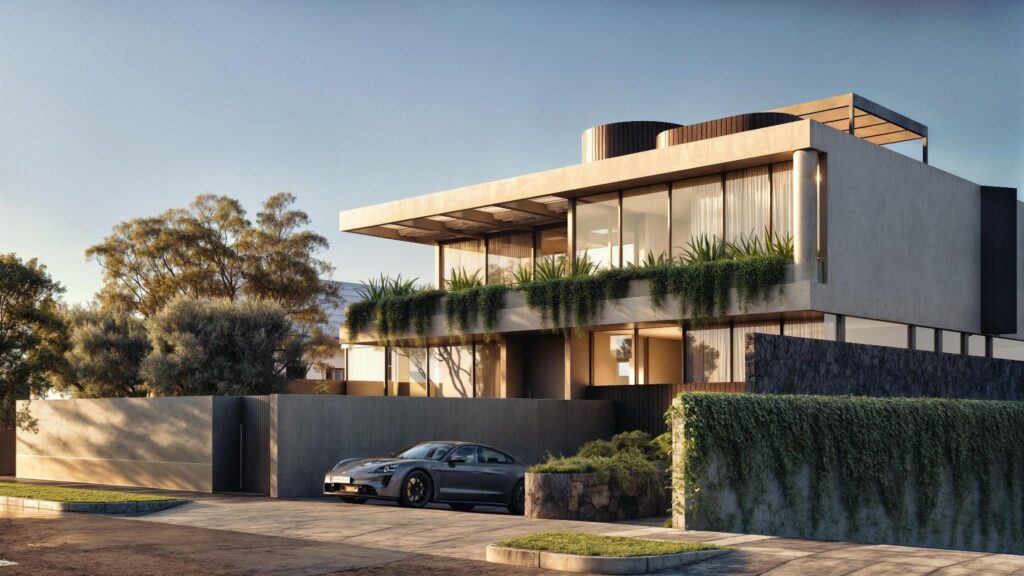
A representative contemporary building of the kind delivered within the Nexus Care vertical — precise, compliant and right-sized to its catchment.
Governance and delivery discipline
A defensive asset class still demands disciplined delivery. The Campbellfield Superclinic benefits from the same institutional-grade governance that supports every Nexus Developments project. Colliers provides advisory and market intelligence; Maddocks provides legal, planning and compliance. Engineering and design partners including MAK Engineering Solutions and Hellier McFarland support build-cost certainty and technical resolution.
That governance framework is what allows a modest $3.5M medical centre to be delivered with the same rigour as a $52M campus. The asset class is defensive, but the execution still has to be precise. To discuss healthcare property opportunities within Nexus Care, contact the team via the Contact page or review the wider portfolio on the All Projects page.
In summary, the Campbellfield Superclinic illustrates why medical centre property has earned its standing as a defensive asset class. Its demand is structural, its tenancy tends to be long and stable, its planning pathway is already resolved, and it sits within a Nexus Care portfolio that also holds a substantial SDA pipeline. For investors seeking dependable, demographically anchored exposure, that combination is exactly the kind of considered, investment-grade proposition Nexus Developments is built to deliver.
Frequently asked questions
Why is medical centre property considered a defensive asset class?
Healthcare demand is structural rather than discretionary — people require medical care regardless of the economic cycle. Nexus Developments places medical centres within Nexus Care precisely because that demand stability supports defensive, resilient income.
What is the Campbellfield Superclinic?
The Campbellfield Superclinic is a $3.5M Nexus Developments healthcare project comprising 8 consulting suites at Campbellfield VIC 3061. It is currently Permit Approved, meaning its planning pathway is resolved.
Why does the Permit Approved milestone matter?
Permit Approved status means the planning pathway for the Campbellfield Superclinic is resolved, converting it from a planning proposition into a delivery proposition. For investors, Nexus Developments regards this as a meaningful de-risking event.
How does the Campbellfield Superclinic relate to the SDA portfolio?
The Campbellfield Superclinic complements a Specialist Disability Accommodation pipeline of 32 SDA apartments with $52M combined Care gross realisable value. Nexus Care holds both segments to diversify within a defensive healthcare property portfolio.
Can investors access healthcare property through Nexus Developments?
Yes. Healthcare property exposure within Nexus Care can be accessed through the Nexus Wealth Fund, which Nexus Developments operates across three funds suited to different risk and return profiles.
About Nexus Developments
Nexus Developments is a leading multi-sector property development company based in Melbourne, Australia, with a project pipeline of over $400 million across residential, NDIS Specialist Disability Accommodation, Montessori-philosophy childcare, education and commercial real estate. Founded by Bhupendra (Ben) Sethia — a 25-year industry leader and Founder Chairman of JITO Australia — and Vish Singh, Nexus Developments operates with institutional-grade governance, partnerships with Colliers and Maddocks, a 7-8 star NatHERS energy standard on every new dwelling, and a commitment to contribute more than 600 dwellings to the National Housing Accord.
Across Nexus Communities, Nexus Care, Nexus Learning, Nexus Commercial and the Nexus Wealth Fund, Nexus Developments delivers projects designed to compound long-term value for investors and communities alike. Whether you are an investor seeking exposure to Melbourne property development, a first-home buyer looking at Melbourne growth corridors, a family considering NDIS-accredited Specialist Disability Accommodation, or a landowner looking for a delivery partner, Nexus Developments has a pathway for you.
Take the next step with Nexus Developments
- Explore current Nexus Developments projects across Melbourne and regional Victoria →
- Register your interest in a Nexus Developments residential community →
- Speak to our investor relations team about the Nexus Wealth Fund →
- Learn how Nexus Care designs SDA housing built for independence →
- Read more insights and market intelligence from the Nexus team →
- Contact Nexus Developments →
Building Sustainable Communities · Distributing Wealth
Nexus Developments APAC · nexusdevelopments.com.au · info@nexusdevelopments.com.au
Disclaimer: This article is general information only and does not constitute financial, investment, legal or tax advice. Investments in Nexus Wealth Fund products are available to wholesale and sophisticated investors as defined under the Corporations Act 2001 (Cth). Past performance is not a reliable indicator of future performance. Renders are artist impressions and indicative only.