

Behind every project in the Nexus Developments pipeline is the same evaluation framework. Five filters. If a site cannot clear all five, Nexus Developments walks. This guide puts the framework on one page — and walks through how each filter has shaped the company’s recent acquisitions across Lune Black Rock, Esplanade Brighton, Armstrong Grove, Allemore Charlemont, Holmead Road and Ashburton.
WHAT THIS GUIDE COVERS
01. Why a framework instead of intuition
02. Filter 1 — Macro: corridor and demographic
03. Filter 2 — Sector fit
04. Filter 3 — Planning pathway
05. Filter 4 — Build-cost certainty
06. Filter 5 — Capital and exit
07. What the framework rules out
08. How the framework has shaped the current Nexus Developments pipeline
09. Frequently asked questions
Why a framework instead of intuition

Most property development decisions are reactive: a site comes up, the broker presents it, the model gets stretched until it works. Nexus Developments tries not to operate that way. Before any site is acquired, it has to clear five filters — explicitly, in writing, with the investment committee. The framework is the operating discipline that protects investor capital. It also protects the company from its own enthusiasm.
Filter 1 — Macro: corridor and demographic
Is the location supported by government infrastructure spend, population trajectory, and employment fundamentals? Not vibes — data. Nexus Developments looks for budgeted, approved infrastructure (not just promised). It looks at five-year demographic forecasts at SA2 level. It looks at where the jobs are, where they are moving to, and who is going to be living within 20 minutes of the site in five years’ time.
This is the filter that placed Armstrong Creek in the top tier of opportunities at acquisition — and the one that ruled out a long list of postcodes that looked attractive on a headline basis but failed the underlying data.
Filter 2 — Sector fit
Does the site actually suit the use Nexus Developments would put on it? A townhouse site is not an SDA site is not a childcare site is not a mixed-use site. Nexus Developments does not force product onto land. The wrong product on the right site is the same outcome as the right product on the wrong site — a slow sales cycle and a stressed model.
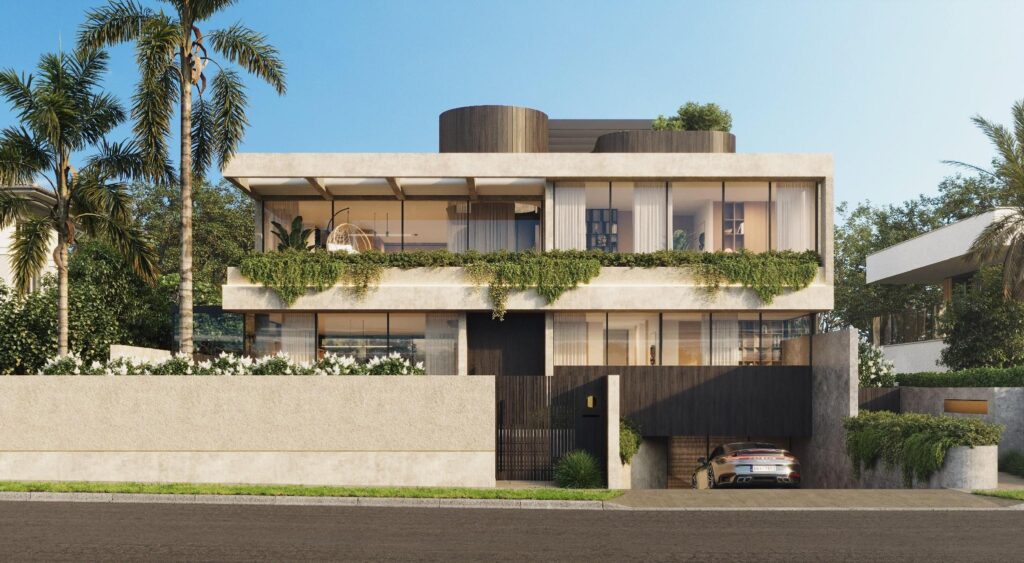
This filter is the reason Lune Black Rock is four homes rather than eight, and why Ashburton SDA is in Melbourne’s inner east rather than the outer west where SDA supply is currently softer.
Filter 3 — Planning pathway
What is the realistic permit timeline, what are the risks, and what is the precedent in the relevant council? Surprises in planning ruin returns. Nexus Developments engages planning consultants early; reads the precedents, the strategic land-use frameworks, and the local objections; and costs the realistic case, not the best case. If the planning pathway has more than two independent risk factors that cannot be mitigated, the site does not clear the filter.
Filter 4 — Build-cost certainty
Can the project be delivered for what the model says? Cost-side risk is asymmetric: a 5% cost overrun erodes much more than 5% of equity returns. Nexus Developments pressure-tests the build estimate with multiple contractors, models contingency at the right percentile, and stress-tests the model against material cost shocks, labour shocks, and programme slippage. If the project only works under best-case inputs, the filter does not clear.
Filter 5 — Capital and exit
Is there a clear capital structure and clear demand for the finished product? Or is the company hoping demand turns up later? Nexus Developments secures the capital before acquiring the site. It tests the offtake (buyer demand, tenant pipeline, fund interest) before it commits. A site that needs a marketing miracle to clear stock is not a site — it is a hope.
“‘Hot’ markets aren’t a strategy. Infrastructure is.”
What the framework rules out
Plenty. Hype-driven postcodes with no infrastructure plan. Sites where the planning pathway is ‘optimistic’. Build programs that assume best-case input prices. Projects that need a marketing miracle to clear stock. Sites in oversupplied submarkets — particularly relevant in SDA right now. Nexus Developments would rather walk from ten sites and acquire the one that passes than do the reverse.
How the framework has shaped the current Nexus Developments pipeline
- Lune Black Rock — passed sector-fit at 4 homes (not 8); passed planning despite a complex heritage frontage
- Esplanade Brighton — passed all 5 filters with a long but predictable planning pathway
- Armstrong Grove and Allemore Charlemont — passed macro on the strongest corridor data of any Victorian residential site in the pipeline
- Ashburton SDA — passed sector-fit on inner-east location vs the softer western metro SDA submarket
- Nexus Life Shepparton — passed macro on the 55+ demographic case and regional Victorian fundamentals
TALK TO OUR INVESTMENT TEAM
Landowners with a site you think fits the framework — Nexus Developments is open to a conversation. Contact us →
Frequently asked questions
What is the Nexus Developments site selection framework?
The framework is a five-filter test that every site must pass before Nexus Developments acquires it: macro, sector fit, planning pathway, build-cost certainty, and capital and exit.
How often does a site clear all five filters?
A small minority of evaluated sites clear all five filters. Nexus Developments would rather walk from ten sites and acquire the one that passes than acquire something that does not.
Does the framework apply to all sectors?
Yes. The same five filters apply to residential, SDA, childcare, education and commercial sites — adapted for the economics of each sector.
Where can I read more about Nexus Developments’ governance?
See Nexus Developments governance for a fuller explanation of the partner network, investment committee process and quarterly investor reporting cadence.
How do I refer a site to Nexus Developments?
Contact Nexus Developments with site details. The team will respond on whether the site is a fit for the current pipeline.
About Nexus Developments
Nexus Developments is a leading multi-sector property development company based in Melbourne, Australia, with a project pipeline of over $400 million+ across residential, NDIS Specialist Disability Accommodation, Montessori childcare, education and commercial real estate. Founded by Bhupendra (Ben) Sethia — a 25-year industry leader and Founder Chairman of JITO Australia — Nexus Developments operates with institutional-grade governance, partnerships with Colliers and Maddocks, a 7-8 star NatHERS energy standard on every new dwelling, and a commitment to contribute more than 600 dwellings to the National Housing Accord.
Across Nexus Communities, Nexus Care, Nexus Learning, Nexus Commercial and the Nexus Wealth Fund, Nexus Developments delivers projects designed to compound long-term value for investors and communities alike. Whether you are an investor seeking exposure to Melbourne property development, a first-home buyer looking at Melbourne growth corridors, a family considering NDIS-accredited Specialist Disability Accommodation, or a landowner looking for a delivery partner, Nexus Developments has a pathway for you.
Take the next step with Nexus Developments
- Explore current Nexus Developments projects across Melbourne and regional Victoria →
- Register your interest in a Nexus Developments residential community →
- Speak to our investor relations team about the Nexus Wealth Fund →
- Learn how Nexus Care designs SDA housing built for independence →
- Read more insights and market intelligence from the Nexus team →
- Contact Nexus Developments →
BUILDING SUSTAINABLE COMMUNITIES · DISTRIBUTING WEALTH
Nexus Developments APAC · nexusdevelopments.com.au · info@nexusdevelopments.com.au
Disclaimer: This article is general information only and does not constitute financial, investment, legal or tax advice. Investments in Nexus Wealth Fund products are available to wholesale and sophisticated investors as defined under the Corporations Act 2001 (Cth). Past performance is not a reliable indicator of future performance. Renders are artist impressions and indicative only.