

There is a sentence that captures the difference in how Specialist Disability Accommodation can be approached: most SDA is built to comply, ours is built to live in. It sounds simple, but it describes two genuinely different philosophies. One treats the SDA design standards as a ceiling, the goal being to meet the rules and qualify for funding. The other treats those standards as a floor and asks a harder question: would someone actually want to live here?
Nexus Developments builds Specialist Disability Accommodation through its care vertical, and it has chosen the second philosophy. Its SDA pipeline currently comprises 32 SDA apartments across three projects, with a combined Care gross realisable value of $52M. That includes Mentone Mews, a 13-apartment development with 12 NDIS and 1 Care apartment, and Mentone Heights, which pairs 5 townhouses with 9 NDIS units.
This article sets out what good SDA housing design actually involves, why dignity belongs at the centre of it, and how the Nexus Developments care projects are shaped by the principle of building homes rather than facilities. The goal is to show what it looks like when disability accommodation is designed for the people who will live in it, not merely for the audit that approves it.
What Specialist Disability Accommodation Is
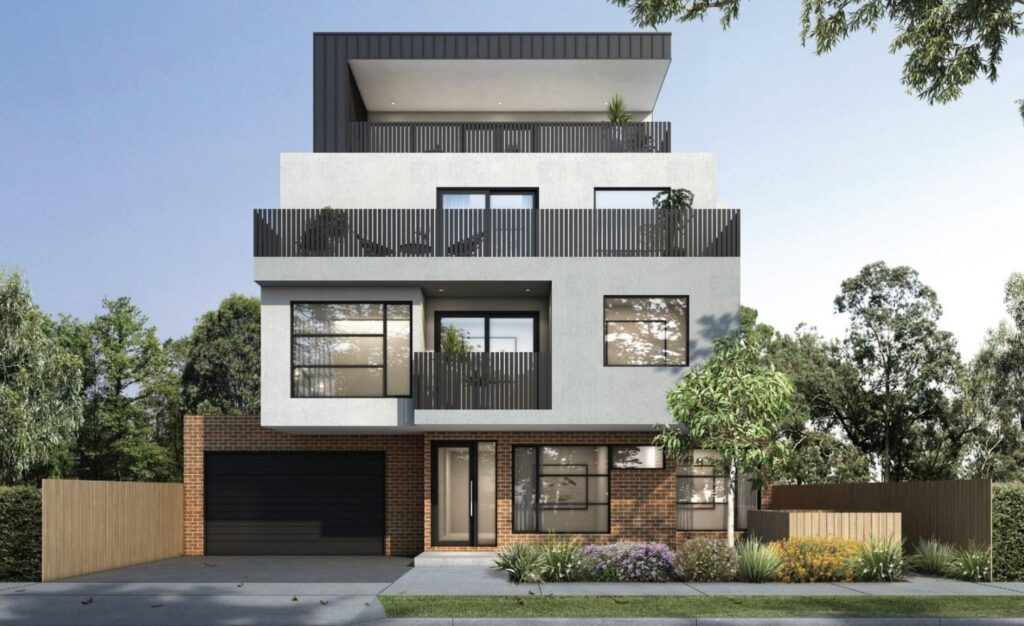
*Mentone Mews, a Specialist Disability Accommodation development of 12 NDIS and 1 Care apartment.*
Specialist Disability Accommodation, or SDA, refers to housing funded under the National Disability Insurance Scheme for people with extreme functional impairment or very high support needs. It is not the support a person receives day to day, but the physical home itself, designed and built so that a person with significant disability can live as independently and safely as possible.
Because SDA is funded through the NDIS, it operates within a framework of design categories and standards that a dwelling must meet to be enrolled. These rules cover accessibility, robustness, fire safety and provision for assistive technology. Meeting them is essential, but it is only the entry point, not the finish line, for genuinely good housing.
Nexus Developments delivers SDA through Nexus Care, the vertical responsible for NDIS Specialist Disability Accommodation alongside medical centres. Treating SDA as a dedicated discipline, rather than a variation on standard residential work, is what allows the company to design beyond compliance.
Built to Comply Versus Built to Live In
The distinction between compliance-driven and liveability-driven SDA is the single most important idea in this field. A home built only to comply will tick every box on the SDA design standards and still feel institutional, because nothing beyond the minimum has been considered. The corridors are wide enough, the bathroom is accessible, and yet it does not feel like a home.
A home built to live in starts from the resident’s daily experience and works backward to the standards. It asks where the light falls, how a kitchen can be used from a wheelchair without feeling clinical, how a resident hosts a friend, and how privacy and connection are balanced. The compliance is achieved along the way rather than treated as the entire brief.
This is the philosophy Nexus Developments has adopted. The company’s framing, that most SDA is built to comply while theirs is built to live in, is a design commitment with real consequences for how its care projects are planned, detailed and finished.
Design Principles for SDA That Works
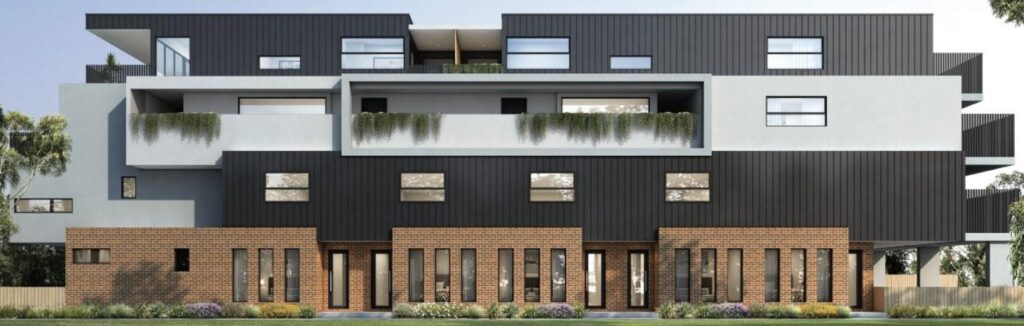
*Mentone Heights, combining 5 townhouses with 9 NDIS units in a single development.*
Good SDA housing design rests on a set of principles that go beyond the regulatory checklist. The first is genuine accessibility, meaning spaces that are not just technically reachable but comfortable to use, with circulation, bench heights and door widths designed around real movement rather than minimum dimensions.
The second is robustness without harshness. SDA must be durable, but durable materials can still be warm and domestic rather than cold and clinical. The third is provision for assistive technology and support, integrated discreetly so that the home does not advertise the resident’s disability at every turn. The fourth is light, outlook and connection to the outside, which matter enormously to anyone who spends significant time at home.
Nexus Developments applies these principles across its care portfolio and pairs them with the company-wide commitment to a 7 to 8 star NatHERS energy rating on new dwellings. An efficient, comfortable home is part of dignity too, because it is cheaper to run and more pleasant to live in across the seasons.
Designing Around the Resident
The most reliable test of SDA housing design is whether the layout starts from the resident rather than the regulation. Nexus Developments designs around the daily routines of the people who will live in each home, which is how a dwelling clears the compliance bar while still feeling like somewhere a person would choose to be.
Dignity as a Design Requirement
Dignity is often discussed as a value rather than a design requirement, but in SDA the two are inseparable. A home that forces a resident to depend on others for tasks they could manage themselves, or that looks visibly like a care facility, quietly diminishes the person living in it. Design choices either support dignity or erode it.
Designing for dignity means enabling independence wherever possible, giving residents control over their own environment, and ensuring that support features are present without being the defining visual feature of the home. It means a resident can invite a friend over and have the space read as their home, not as accommodation provided to them.
For Nexus Developments, this is the heart of the built to live in philosophy. The company treats dignity as a measurable outcome of design decisions, which is a more demanding standard than compliance because it cannot be satisfied by a checklist alone.
Mentone Mews: Apartments Designed for Living
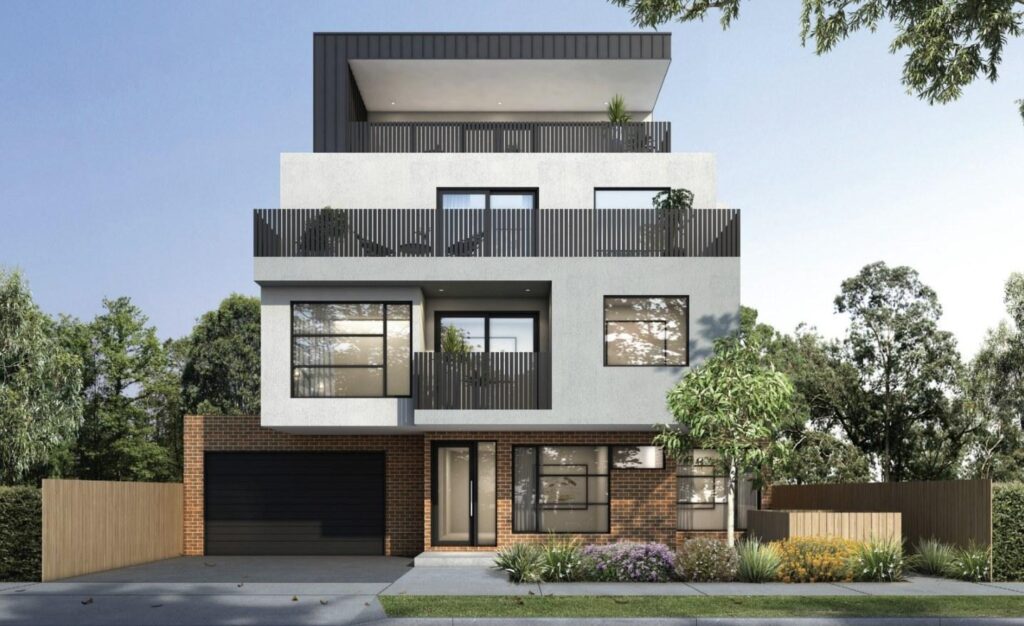
*Mentone Mews, a three-level SDA apartment development under construction in Mentone.*
Mentone Mews in Mentone is a Specialist Disability Accommodation development of 13 apartments across three levels, comprising 12 NDIS apartments and 1 Care apartment, with a project value of $18M and currently under construction. The apartment format is a deliberate choice with real benefits for residents.
An apartment development allows residents to live within a connected community while retaining their own private home, which supports both independence and the option of social connection. The three-level configuration delivers this density in an established suburban setting close to services, rather than isolating residents on the urban fringe.
Mentone Mews is a clear example of the Nexus Developments approach in built form. Designing 12 NDIS and 1 Care apartment to a genuine residential standard, in a location with real amenity, reflects the conviction that SDA should be housing people want to live in, not accommodation they are placed into.
Mentone Heights: Townhouses and SDA Together
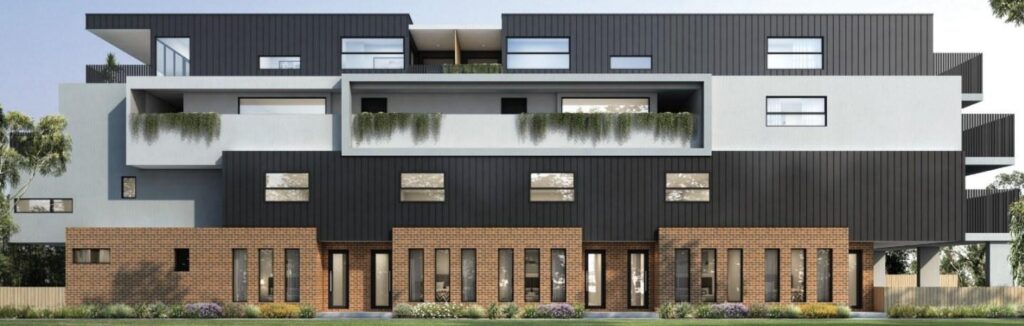
*Mentone Heights, where 9 NDIS units are integrated with 5 market townhouses.*
Mentone Heights on Balcombe Road in Mentone takes a different and instructive form. It combines 5 townhouses with 9 NDIS units in a single development valued at $19M, currently under planning. Bringing market townhouses and SDA together in one project is a meaningful design and social decision.
Integrating SDA within a broader residential development helps normalise disability accommodation as part of an ordinary neighbourhood rather than something set apart. Residents of the NDIS units live alongside other households, which is exactly the kind of inclusion that good SDA housing design aims to achieve at the scale of a whole community.
Mentone Heights demonstrates that Nexus Developments thinks about SDA not only at the level of the individual home but at the level of the development as a whole. The mix of townhouses and NDIS units is a model for how specialist accommodation can be woven into the everyday fabric of a suburb.
The 32-Apartment SDA Pipeline
Across its care work, Nexus Developments has built an SDA pipeline of 32 SDA apartments with a combined Care gross realisable value of $52M, drawing together Mentone Mews, Mentone Heights and the Ashburton SDA project, a 10-unit NDIS development valued at $15M and under construction in Ashburton.
A pipeline of this scale signals commitment to the sector rather than a one-off project. Specialist Disability Accommodation in Australia has long been undersupplied, and a developer delivering 32 apartments to a built to live in standard is making a substantial contribution to closing that gap, not just adding a single building.
It also creates the conditions for the philosophy to mature. Designing multiple SDA projects lets Nexus Developments refine what works for residents across different formats, from apartments to integrated townhouse developments, and carry those lessons forward. Scale and quality reinforce each other across the pipeline.
How SDA Fits the Wider Nexus Developments Mission
Specialist Disability Accommodation is not a departure from the Nexus Developments mission; it is a direct expression of it. The company’s tagline, Building Sustainable Communities, Distributing Wealth, describes a developer that measures success by who its projects serve, and SDA serves Australians whose housing needs the open market has chronically overlooked.
Delivering SDA alongside residential estates, retirement living, childcare and mixed-use precincts means the same care and standards run across a portfolio of more than $400M and 16 projects. The discipline that builds a luxury home or a masterplanned estate is brought to bear on disability accommodation, which is exactly how the built to live in standard is sustained.
Readers who want to see the care pipeline in the context of the company’s full body of work can review the All Projects page. It shows where the 32-apartment SDA pipeline sits within the broader ambitions of Nexus Developments across Victoria.
Frequently Asked Questions
What is Specialist Disability Accommodation?
Specialist Disability Accommodation, or SDA, is housing funded under the NDIS for people with extreme functional impairment or very high support needs. It refers to the physical home itself, designed and built so a person with significant disability can live as independently and safely as possible, and must meet specific design standards to be enrolled.
What does built to live in rather than built to comply mean?
It means designing SDA around the resident’s daily experience rather than treating the design standards as the entire brief. A compliance-driven home meets the rules but can still feel institutional, whereas Nexus Developments starts from how a resident actually lives and achieves the standards along the way, producing a genuine home.
How large is the Nexus Developments SDA pipeline?
The Nexus Developments SDA pipeline comprises 32 SDA apartments with a combined Care gross realisable value of $52M, across Mentone Mews (12 NDIS and 1 Care apartment), Mentone Heights (9 NDIS units with 5 townhouses) and the Ashburton SDA project (10 NDIS units).
Why does Mentone Heights combine townhouses with SDA units?
Integrating 9 NDIS units with 5 market townhouses helps normalise disability accommodation as part of an ordinary neighbourhood rather than something set apart. Residents live alongside other households, which is the kind of inclusion that good SDA housing design aims to achieve at the scale of a whole development.
How does dignity factor into SDA design?
Dignity is a design requirement, not just a value. It means enabling independence, giving residents control over their environment, and integrating support features discreetly so a home does not look like a care facility. Nexus Developments treats dignity as a measurable outcome of design decisions, a more demanding standard than compliance alone.
About Nexus Developments
Nexus Developments is a leading multi-sector property development company based in Melbourne, Australia, with a project pipeline of over $400 million across residential, NDIS Specialist Disability Accommodation, Montessori childcare, education and commercial real estate. Founded by Bhupendra (Ben) Sethia — a 25-year industry leader and Founder Chairman of JITO Australia — Nexus Developments operates with institutional-grade governance, partnerships with Colliers and Maddocks, a 7-8 star NatHERS energy standard on every new dwelling, and a commitment to contribute more than 600 dwellings to the National Housing Accord.
Across Nexus Communities, Nexus Care, Nexus Learning, Nexus Commercial and the Nexus Wealth Fund, Nexus Developments delivers projects designed to compound long-term value for investors and communities alike. Whether you are an investor seeking exposure to Melbourne property development, a first-home buyer looking at Melbourne growth corridors, a family considering NDIS-accredited Specialist Disability Accommodation, or a landowner looking for a delivery partner, Nexus Developments has a pathway for you.
Take the next step with Nexus Developments
→ Explore current Nexus Developments projects across Melbourne and regional Victoria
→ Register your interest in a Nexus Developments residential community
→ Speak to our investor relations team about the Nexus Wealth Fund
→ Learn how Nexus Care designs SDA housing built for independence
→ Read more insights and market intelligence from the Nexus team
Building Sustainable Communities · Distributing Wealth
Nexus Developments APAC · nexusdevelopments.com.au · info@nexusdevelopments.com.au
Disclaimer: This article is general information only and does not constitute financial, investment, legal or tax advice. Investments in Nexus Wealth Fund products are available to wholesale and sophisticated investors as defined under the Corporations Act 2001 (Cth). Past performance is not a reliable indicator of future performance. Renders are artist impressions and indicative only.