

Are you buying a home that meets today’s minimums or tomorrow’s standards?
Australia’s 2026 building regulations mandate 7-star energy ratings for all new residential construction, a significant jump from the current 6-star requirement. Most property developers are scrambling to understand compliance. At Nexus Developments, we’ve been building 7-8 star energy-rated homes for years, not because regulations demanded it, but because it’s the right standard for buyers and the environment.
This isn’t regulatory compliance, it’s competitive positioning. Energy-efficient new build homes in Melbourne cost less to operate, maintain higher resale values, and attract environmentally-conscious buyers willing to pay premiums. According to Sustainability Victoria’s energy efficiency research, upgrading from 6-star to 8-star saves homeowners approximately $1,000-$1,200 annually in heating and cooling costs.
This guide explains what 7-8 star ratings mean for daily living, how much buyers save, why Nexus invested early, and what benefits homeowners gain beyond environmental virtue.
Note: All figures mentioned are well-researched estimates and should be independently verified. They are provided for illustrative purposes only.
What 7-8 Star Ratings Actually Mean
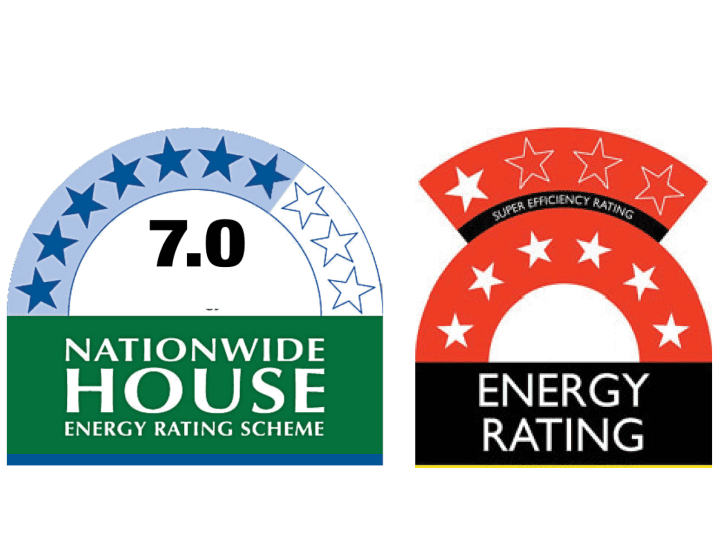
Australia’s NatHERS (Nationwide House Energy Rating Scheme) measures how much heating and cooling energy homes need annually. Higher stars mean less energy required maintaining comfortable temperatures.
The scale:
- 6 stars: Current minimum (2022-2025)
- 7 stars: New minimum from 2026
- 8 stars: Premium efficiency (Nexus standard)
- 10 stars: Net-zero (produces own energy)
A 6-star Melbourne home needs approximately 150-180 MJ/m² annually for climate control. An 8-star home needs 80-100 MJ/m², nearly 50% less energy. This translates directly to bills. Less energy needed means lower costs.
For properties on the market, star ratings predict ongoing expenses more reliably than purchase price alone. A $650,000 home with 6-star rating costs approximately $2,400 annually for heating and cooling. The same home built to 8-star costs approximately $1,200-$1,400 annually, $1,000+ saved every year.
Note: All figures mentioned are well-researched estimates and should be independently verified. They are provided for illustrative purposes only.
The Cost Savings: Real Numbers
Energy efficiency delivers measurable financial benefits homeowners experience monthly.
Annual savings (Melbourne climate):
- 6-star home: Approximately $2,400 heating/cooling annually
- 7-star home: Approximately $1,800 annually (saving $600)
- 8-star home: Approximately $1,200-$1,400 annually (saving $1,000-$1,200)
Lifetime savings (30-year mortgage):
- 7-star vs 6-star: Approximately $18,000 saved
- 8-star vs 6-star: Approximately $30,000-$36,000 saved
These calculations use current electricity and gas prices. As energy costs rise (historically 3-5% annually above inflation), savings compound. An 8-star home saving $1,200 annually today might save $1,600-$1,800 annually in 10 years.
For first home buyers stretching budgets, $1,000+ annual savings matters significantly. That’s mortgage offset, emergency fund contribution, or quality-of-life spending rather than utility bills.
Property developers charging premiums for 8-star homes deliver buyers positive return within years through energy savings. After payback, it’s pure savings for remaining ownership period.
Note: All figures mentioned are well-researched estimates and should be independently verified. They are provided for illustrative purposes only.
Beyond Bills: Comfort and Health Benefits
Energy efficiency isn’t purely financial. It improves daily living quality in ways difficult to quantify but significantly affecting satisfaction.
Temperature consistency: Better insulation and airtightness mean even temperatures throughout homes. No cold corners in winter, no hot spots in summer. Rooms maintain comfortable temperatures without constantly running heating or cooling.
Reduced drafts: Airtight construction eliminates drafts. You don’t feel cold air infiltrating around windows and doors. This improves perceived warmth even at lower thermostat settings, reducing heating needs.
Acoustic benefits: Insulation blocking heat also blocks noise. Homes near busy roads, railways, or commercial areas benefit substantially from acoustic improvements accompanying efficiency measures. This creates quieter, more peaceful living environments.
Improved air quality: High-efficiency homes include proper ventilation systems maintaining fresh air whilst minimising energy loss. This reduces moisture, mould, and allergens. For families with asthma or allergies, this improves health outcomes measurably.
Stable humidity: Better building envelope control maintains appropriate humidity levels. Too-dry winter air and too-humid summer air both create discomfort. Efficient homes moderate these extremes naturally.
These comfort improvements are difficult quantifying financially but significantly affect liveability. Buyers consistently report higher satisfaction in 8-star homes versus 6-star comparisons.
Resale Value Protection
As energy costs rise and environmental awareness grows, efficient homes command resale premiums increasing over time.
Buyers increasingly request energy ratings during property searches. High ratings attract more buyers, supporting prices. Low ratings deter buyers or trigger price negotiations downward.
Additionally, regulations will continue tightening. Homes meeting 2026 standards (7 stars) avoid retrofit requirements when standards increase again in 2030-2035. Homes exceeding standards (8 stars) remain compliant through multiple regulatory cycles without expensive upgrades.
Retrofitting efficiency is expensive and disruptive. Adding insulation requires removing ceilings or walls. Improving airtightness means extensive sealing work. Upgrading windows costs thousands. Homes built efficiently from start avoid these future costs entirely.
For properties built to 8-star standards, buyers planning 10-15+ year ownership protect future value. The premium paid today becomes competitive advantage tomorrow when competing against 6-star resale homes requiring expensive retrofits.
What Creates 7-8 Star Ratings
Achieving premium ratings requires integrated design, not single features added separately.
Superior insulation: R4.0-R6.0 ceiling insulation versus 6-star minimum R3.5. R2.5-R3.0 wall insulation versus minimum R1.5. This reduces heat transfer through building envelope dramatically.
Quality windows: Double-glazing on vulnerable orientations (south, west) reduces heat loss and gain. Low-e coatings reflect heat whilst maintaining light transmission.
Airtightness: Careful sealing prevents air leakage. Blower door testing confirms performance. This stops conditioned air escaping and outdoor air infiltrating.
Passive design: North-facing living areas maximise winter sun. Eaves shade summer sun. Cross-ventilation reduces cooling needs. These design choices cost nothing but require planning.
Efficient systems: High-performance heating, cooling, and hot water systems reduce consumption. Heat pumps replace gas where viable, improving efficiency further.
These features increase construction costs initially. But annual savings deliver payback whilst improving comfort throughout ownership.
Why Nexus Chose 7-8 Stars as Standard
Most property developers build to minimum compliance (currently 6 stars, soon 7 stars mandatory). We standardised 7-8 stars years ago for strategic reasons.
Buyer value: Energy efficiency delivers tangible benefits buyers recognise immediately. This creates competitive advantage versus minimum-compliance competitors offering nothing beyond regulatory requirements.
Future-proofing: Building 8-star now means homes remain compliant through multiple regulatory cycles without retrofit requirements. When 8-star becomes mandatory (likely 2030-2035), our homes already comply.
Environmental responsibility: Building 600+ dwellings, our choices significantly impact carbon emissions. We can build profitably whilst reducing footprint. These aren’t opposing goals.
Premium positioning: Efficiency justifies price premiums buyers accept. Demonstrating $1,000 annual savings makes purchase premium rational investment, not optional upgrade.
Regulatory leadership: When 2026 standards arrive requiring 7-star minimum, we’re already exceeding them. Competitors scramble with redesigns, we continue operations normally with proven systems.
Early adoption costs more initially but creates lasting advantages. Our experience and systems are years ahead of competitors now adopting efficiency under regulatory pressure.
Armstrong Grove and Allemore: 7-8 Star Standard
At Nexus Developments, our Armstrong Creek developments deliver 7-8 star energy efficiency as standard.
Armstrong Grove (75 lots) and Allemore (70 lots):
- 7-8 star energy ratings across all packages
- Fixed-price building contracts
- Energy cost projections provided upfront
- Help to Buy eligible
- Infrastructure-backed location
Combined 145 lots provide first home buyers and families with energy-efficient homes saving $1,000+ annually whilst exceeding 2026 mandatory standards.
Interested in 7-8 star energy-efficient homes exceeding 2026 standards? Explore house and land packages and new properties built to premium sustainability standards. Nexus also offers Project Management services and Land Lease options for sustainable development partnerships. Contact info@nexusdevelopments.com.au or call +61 3 9460 1865.