

Why do regional Victorian families deserve the same quality early education as metropolitan areas?
Most childcare property investment in Australia concentrates in metropolitan areas where population density and household incomes justify premium educational approaches. At Nexus Developments, our Nexus Learning centres in Numurkah (90 places) and Eaglehawk (100 places) bring Montessori-inspired education to regional communities typically limited to basic childcare models. This isn’t charity, it’s recognition that quality early education shouldn’t depend on postcode.
Montessori philosophy emphasises child-led learning, individualised development, and hands-on exploration rather than rigid curriculum and group instruction. This approach, typically reserved for expensive private centres in Toorak or South Yarra, creates foundation skills, independence, and love of learning benefiting children throughout their education journey.
According to Montessori Australia’s educational research, children in Montessori programmes demonstrate stronger executive function, creativity, and social skills compared to traditional early learning environments. These benefits compound through primary and secondary education.
This article examines why Nexus chose Montessori for regional centres, how childcare property investment creates community impact beyond returns, and what differentiates quality early learning from minimum compliance childcare.
The Montessori Difference: Child-Led Learning

Montessori education differs fundamentally from traditional childcare and kindergarten approaches.
Traditional childcare approach:
- Teacher-directed group activities
- Age-based curriculum advancement
- Scheduled transitions between activities
- Emphasis on compliance and routine
- Limited individual choice
Montessori approach:
- Child-led exploration and discovery
- Individual developmental pace
- Uninterrupted work periods (2-3 hours)
- Emphasis on independence and decision-making
- Prepared environment enabling choice
In Montessori classrooms, children choose activities matching their interests and developmental readiness. Teachers observe and guide rather than direct. Multi-age groupings (3-5 years together) enable peer learning and mentorship. Materials progress from concrete to abstract, building understanding through hands-on experience.
This approach develops executive function, the cognitive skills controlling attention, planning, and self-regulation. Research consistently shows Montessori children demonstrate stronger executive function than traditionally-educated peers, advantages persisting through adolescence.
Why Regional Communities Deserve Premium Education
Metropolitan families access diverse early learning options: Montessori centres, Reggio Emilia programmes, language immersion, specialist STEM focus. Regional families typically choose between basic long-day care centres meeting minimum regulatory requirements.
This educational inequality compounds across childhood. Children attending quality early learning enter primary school with stronger literacy, numeracy, and social skills. This advantage grows through schooling, affecting academic achievement, university access, and career opportunities.
Nexus Learning rejects this inequality. Regional Victorian families work hard, pay taxes, and contribute to communities. Their children deserve the same educational foundation as metropolitan peers.
Our Numurkah and Eaglehawk centres deliver Montessori-inspired programmes at standard childcare rates, not premium private school fees. Government Child Care Subsidy applies normally, making quality education accessible regardless of household income.
Childcare Property Investment: Returns and Community Impact
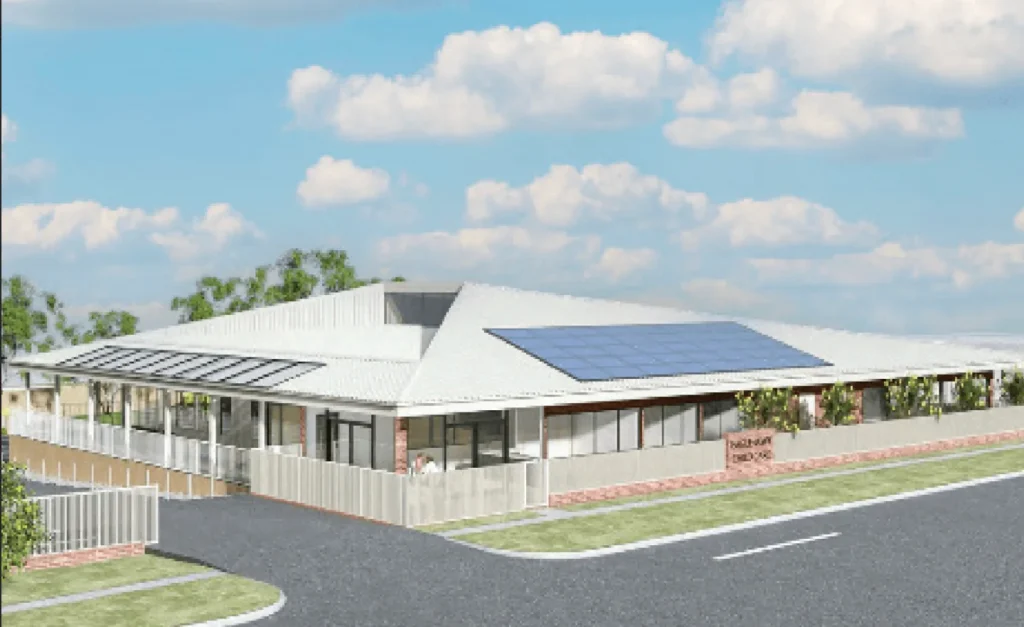
Childcare property investment delivers stable returns through government-subsidised fee income whilst addressing critical community infrastructure gaps.
Investment fundamentals:
Occupancy rates: Quality centres in underserved areas maintain 90-95% occupancy year-round. Waiting lists extend 6-12 months ahead.
Revenue stability: Child Care Subsidy provides government-backed portion of fees, reducing parent payment risk. Economic downturns minimally impact childcare demand as parents must work.
Lease structures: Long-term leases (15-20 years) to experienced operators provide income certainty. Rent reviews indexed to CPI maintain real returns.
Capital growth: Childcare properties appreciate with land value and building improvements. Scarcity of approved sites creates supply constraint supporting values.
Gross yields: Regional childcare properties deliver 6-8% gross yields, higher than residential (3-4%) or commercial office (5-6%).
Note: All figures mentioned are well-researched estimates and should be independently verified. They are provided for illustrative purposes only.
Beyond financial returns, childcare property investment addresses workforce participation barriers. Without accessible childcare, parents (particularly mothers) cannot work, reducing household incomes and limiting economic participation.
Numurkah and Eaglehawk: Addressing Regional Shortage
Regional Victoria faces severe childcare shortages limiting workforce participation and economic development.
Numurkah context:
Population approximately 3,000 with surrounding agricultural district. Young families work in dairy, agriculture, and regional services. Prior to Discovery Cove opening, families drove 30-40 minutes to Shepparton for childcare or relied on informal arrangements limiting work hours.
Discovery Cove (90 places) eliminated this barrier. Parents work locally. Children receive Montessori education. Economic activity concentrates in Numurkah rather than draining to larger centres.
Eaglehawk context:
Bendigo suburb population approximately 5,000. Existing childcare centres operated at capacity with extensive waiting lists. Young families delayed workforce return or relocated to areas with childcare access.
Eaglehawk centre (100 places) absorbed waiting lists and enabled new families settling in the area. This supports Bendigo’s regional growth strategy attracting families from Melbourne seeking affordable housing and lifestyle.
Both centres employ 45+ local staff, creating permanent regional employment whilst enabling hundreds of parents’ workforce participation.
What Differentiates Quality from Compliance-Minimum
Not all childcare centres deliver equal educational outcomes. Minimum compliance centres meet regulatory requirements without educational philosophy or intentional programming.
Compliance-minimum centres:
- Staff-to-child ratios meeting minimum requirements
- Basic toys and equipment
- Television and screens for behaviour management
- Structured group activities with limited choice
- Outdoor play in basic playground
Nexus Learning quality approach:
- Staff ratios exceeding requirements (lower staff-to-child)
- Montessori materials and prepared environments
- Screen-free programming focusing on hands-on learning
- Child-led activity choice and uninterrupted work periods
- Natural outdoor spaces with gardens, sandpits, water play
This quality costs more in staffing, materials, and facility design. We accept this because early education matters. The foundation years (0-5) create neural pathways, learning habits, and social skills affecting entire lifetimes.
Parents choosing childcare should demand educational philosophy, not just supervision. Ask about curriculum approach, staff qualifications, child-to-educator ratios, and learning outcomes. Visit centres observing whether children engage deeply in activities or drift between superficial play.
Montessori in Practice: What Parents See
Parents visiting Nexus Learning centres observe distinctive features:
Prepared environments: Classrooms organised into learning areas (practical life, sensorial, language, mathematics, cultural studies). Materials displayed at child height enabling independent access and choice.
Mixed-age groupings: 3-5 year olds together. Younger children observe and learn from older peers. Older children reinforce learning through teaching younger ones.
Uninterrupted work periods: Children choose activities and work without interruption for 2-3 hours. This builds concentration, persistence, and deep engagement.
Independence emphasis: Children prepare own snacks, clean up activities, resolve conflicts through discussion. Adults guide rather than control.
Outdoor integration: Gardens where children grow vegetables, natural materials for creative play, outdoor classrooms extending learning beyond buildings.
These elements create learning environments fundamentally different from traditional childcare, differences parents observe immediately when visiting.
Looking Ahead: Expanding Regional Access
Nexus continues evaluating regional childcare opportunities where communities face shortages and families lack access to quality early education.
Our model demonstrates that premium educational approaches work financially in regional areas when developers accept metropolitan-comparable returns and prioritise community impact alongside profit.
Interested in Montessori-inspired early learning in regional Victoria? Explore Nexus Learning centres in Numurkah and Eaglehawk delivering quality education at accessible rates. Contact info@nexusdevelopments.com.au or call +61 3 9460 1865.