

How do you tell the difference between quality Specialist Disability Accommodation and minimum-compliance properties that look acceptable but fail participants’ needs?
Finding appropriate NDIS housing rental represents one of the most crucial decisions NDIS participants and families make. Unlike standard rental searches focusing on bedrooms, location, and price, NDIS housing requires evaluating accessibility features, support compatibility, community integration potential, and provider responsiveness. Poor choices condemn participants to unsuitable housing limiting independence and dignity for years.
At Nexus Developments, our Nexus Care portfolio delivers 34 High Physical Support SDA units across premium Melbourne locations: Ashburton, Mentone Heights, and Mentone Mews. Through hundreds of participant interactions, we’ve identified what families should demand and red flags signalling problems.
According to the Housing Hub’s NDIS accommodation guide, approximately 40% of participants report dissatisfaction with their SDA placement, citing poor location, inadequate design, or unresponsive providers. This guide helps families avoid those outcomes.
This article explains SDA categories, critical questions for providers, location assessment criteria, design features that matter, and red flags indicating minimum-compliance properties.
Understanding SDA Categories: Match Support Needs
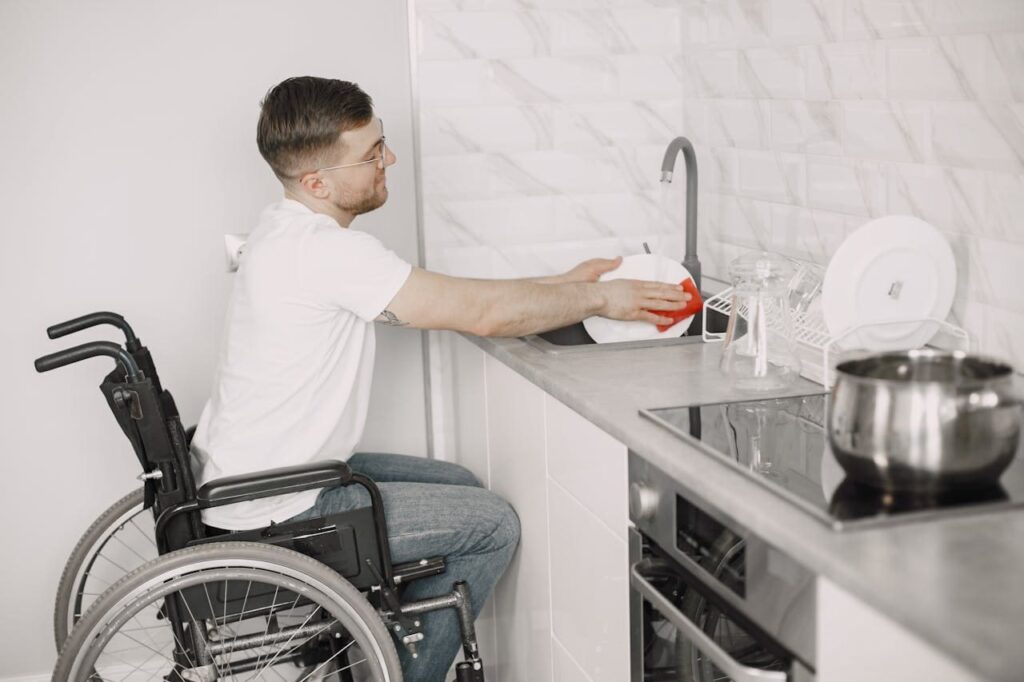
Specialist Disability Accommodation comes in four design categories matching different support requirements.
Improved Liveability: Basic accessibility for participants with sensory, intellectual, or cognitive impairment. Typically one-bedroom units in shared houses. Least complex and lowest SDA payments.
Fully Accessible: Wheelchair accessible throughout with widened doorways (900mm+), accessible bathrooms, and wheelchair-height fixtures. For participants requiring wheelchair mobility but minimal physical assistance.
Robust: Designed for participants whose behaviour may damage property. Features reinforced walls, impact-resistant fittings, secure outdoor areas, and durable materials. For participants with complex behavioural support needs.
High Physical Support (HPS): For participants requiring substantial physical assistance. Includes ceiling hoists, height-adjustable kitchens/bathrooms, accessible outdoor areas, and wide circulation spaces (1,550mm). Nexus Care specialises in HPS properties.
Matching SDA category to participant needs is critical. Insufficient category limits independence. Excessive category wastes funding whilst providing unused features.
Participants should request occupational therapist assessment confirming appropriate SDA category before searching properties.
Location Matters: Community Integration vs Isolation
The NDIS’s founding principle emphasises community participation, not institutional segregation. Location determines whether this succeeds.
What makes locations suitable for NDIS housing rental:
Public transport access: Within 400-800 metres of train stations or frequent bus routes. Participants rely on public transport for independence far more than general population.
Walkable amenities: Shops, cafes, medical centres, banks, and community facilities within safe walking distance. Isolated suburban locations limit participation.
Employment proximity: Near potential workplaces including supported employment providers, cafes, retail, and community services. Work participation depends on geographic accessibility.
Recreation facilities: Parks, libraries, community centres, and leisure venues enabling social connection and recreation.
Medical services: GP clinics, allied health providers, and hospitals accessible for regular appointments and emergencies.
Nexus Care’s deliberate location selection prioritises these criteria:
Ashburton: Alamein train line, High Street shops, multiple medical centres, and parklands
Mentone Heights: Frankston train line, Mentone shops, coastal recreation, and beaches
Both locations support genuine community participation impossible in cheap outer-suburban or regional locations where providers maximise margins through low land costs.
Critical Questions for SDA Providers
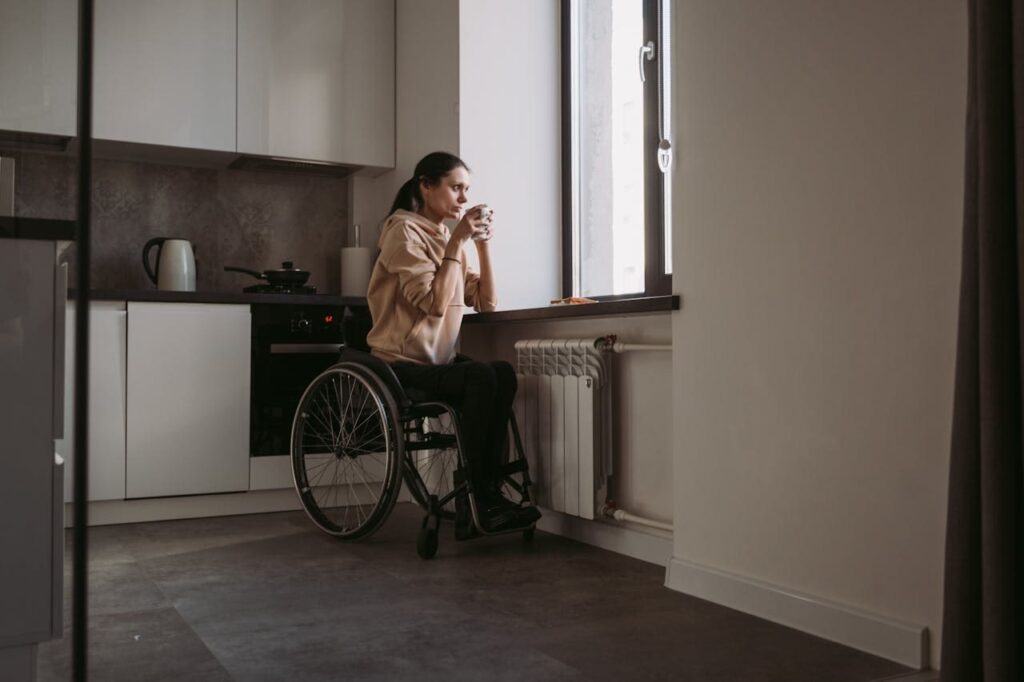
Families should ask detailed questions before committing to NDIS housing rental.
Design and accessibility questions:
“Can you provide floor plans showing circulation spaces, bathroom dimensions, and hoist coverage areas?”
“What height-adjustable fixtures are included? Kitchen benches? Bathroom vanities? Storage?”
“Where exactly do ceiling hoists go? Do they cover bedroom, bathroom, and living areas comprehensively?”
“How wide are doorways and circulation spaces? Minimum 900mm or wider?”
“What outdoor accessibility exists? Level thresholds? Accessible pathways? Covered areas?”
Quality providers answer confidently with documentation. Providers dodging questions or claiming “it meets SDA standards” without specifics signal minimum compliance.
Location and community questions:
“How far to nearest train/bus stop? Which routes? Frequency?”
“What shops, cafes, and services are within 800 metres walking distance?”
“Where are nearest employment support providers, community centres, and recreation facilities?”
“Can participants navigate the neighbourhood safely? Well-lit paths? Safe crossings?”
Management and vacancy questions:
“What’s your average vacancy management timeline? Days? Weeks? Months?”
“How do you handle maintenance requests? Response timeframes?”
“Can I speak with current participants or families for references?”
“What support coordination relationships do you maintain?”
Providers resisting references or transparency should raise concerns.
Red Flags: Warning Signs of Poor-Quality SDA

Certain patterns indicate minimum-compliance properties prioritising investor returns over participant outcomes.
Red flag 1: Outer suburban locations far from public transport
Properties in Tarneit, Wyndham Vale, Pakenham, or similar outer suburbs limit community participation severely. If provider emphasises “affordability” whilst avoiding location questions, that’s a red flag.
Red flag 2: Institutional appearance or high-density clustering
SDA should blend into residential neighbourhoods. Large apartment blocks, multiple SDA properties on single sites, or institutional appearance signals prioritising density over dignity.
Red flag 3: Resistance sharing floor plans or specifications
Quality providers confidently share detailed documentation. Resistance suggests inadequate design or minimalist features.
Red flag 4: “It meets SDA standards” without specifics
Generic assurances without specific measurements, materials, or features indicate minimum compliance. Ask for ceiling hoist coverage maps, exact circulation widths, and fixture specifications.
Red flag 5: No current participant references available
If provider cannot or will not connect you with current participants or families, that’s suspicious. Quality providers maintain positive relationships participants willingly endorse.
Red flag 6: Vacancy management concerns
Extended vacancies between participants suggest poor property quality or location deterring applicants. Ask about average vacancy periods.
Design Features That Actually Matter
Beyond regulatory minimums, certain features significantly improve participant independence and satisfaction.
Comprehensive ceiling hoist coverage: Hoists should cover bedroom to bathroom to living areas seamlessly. Gaps forcing wheelchair transfers between hoist zones defeat the purpose.
Height-adjustable everything: Not just bathroom vanities but kitchen benches, storage, and work surfaces enabling participants working at appropriate heights.
Outdoor accessibility: Level thresholds, covered outdoor areas, accessible gardens, and safe pathways. Many SDA properties provide indoor accessibility whilst ignoring outdoor areas entirely.
Storage accessibility: Wardrobes, pantries, and storage at appropriate heights with accessible door hardware. Standard overhead storage remains useless for wheelchair users.
Natural light and ventilation: Large windows, multiple orientations, and cross-ventilation. Institutional SDA often sacrifices these for density.
Privacy and dignity: Bedroom locations ensuring privacy from communal areas. Bathrooms that don’t open directly onto living areas. Noise insulation between units in multi-dwelling sites.
Nexus Care properties incorporate all these features because we’ve consulted extensively with occupational therapists, participants, and families identifying what actually improves daily living.
The Occupational Therapist Role
Engage occupational therapist (OT) before selecting NDIS housing rental. OTs assess whether properties genuinely meet participant needs.
What OTs evaluate:
- Ceiling hoist coverage adequacy for participant’s mobility needs
- Circulation space sufficiency for wheelchair plus carer assistance
- Height-adjustable fixture appropriateness for participant
- Bathroom accessibility for specific support requirements
- Kitchen accessibility for participant’s cooking participation level
- Environmental control accessibility (light switches, door handles, windows)
OT recommendations carry weight with NDIS planners when requesting specific SDA properties or modifications. Their professional assessment prevents unsuitable matches.
Taking Next Steps
Finding quality NDIS housing rental requires:
- Confirm appropriate SDA category with occupational therapist
- Identify priority locations near public transport and amenities
- Contact providers requesting floor plans and specifications
- Ask critical questions about design, location, and management
- Request current participant/family references
- Visit properties with occupational therapist before committing
- Review vacancy management history and maintenance responsiveness
This diligence prevents years trapped in unsuitable housing.
Searching for quality NDIS housing rental in premium Melbourne locations? Explore Nexus Care’s High Physical Support SDA in Ashburton, Mentone Heights, and Mentone Mews offering person-centred design, comprehensive accessibility, and genuine community integration. Nexus also offers Project Management services and Land Lease options for expanding quality SDA supply. Contact info@nexusdevelopments.com.au or call +61 3 9460 1865.